
How to Print a Complete Proxy Cube: 360, 450, and 540 Cards
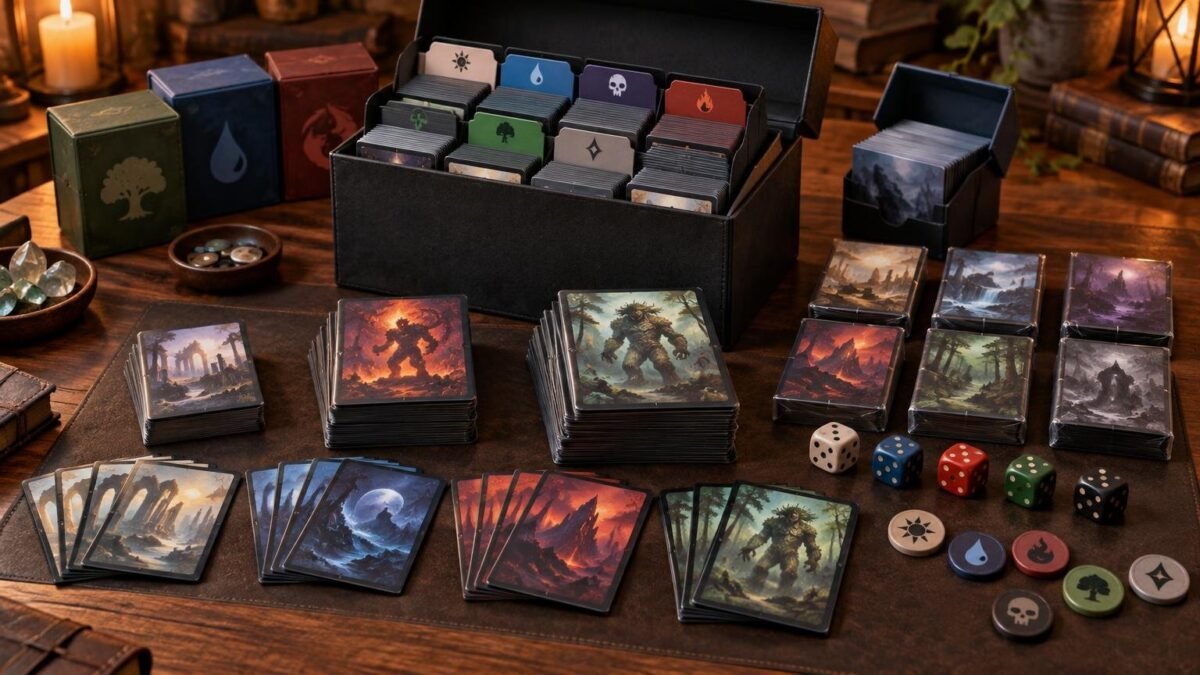
Table of Contents
To print a complete proxy cube, first choose the smallest card pool that delivers the variety your group will actually use. Start with 360 cards for a consistent eight-player environment, 450 for moderate variation, or 540 for substantially more draft-to-draft change. Then lock the list, specify exact printings where they matter, and plan the lands, tokens, sleeves, storage, and pack workflow that turn a stack of cards into a reusable draft kit.
These should be treated as unofficial proxy or playtest pieces. The current Magic Tournament Rules require genuine Magic cards in sanctioned events, apart from narrow situations in which a judge issues a temporary tournament proxy. Wizards also distinguishes informal playtest cards from cards intended to pass as authentic products in its playtest-card policy explanation.
TLDR
- Choose 360 cards if eight players should draft the entire cube every time.
- Choose 450 if you want 90 cards left unseen in a normal eight-player draft, creating variation without greatly reducing archetype exposure.
- Choose 540 if repeat drafts and discovery matter enough to justify 180 unseen cards per eight-player draft.
- Freeze the list before ordering and identify every exact version, double-faced card, token, and intentional duplicate.
- Treat the printed card pool as one part of the kit. Add basic lands, matching opaque sleeves, tokens, storage, dividers, and a repeatable pack-collation method.
- After each draft, update individual cards rather than automatically reprinting the whole cube.
Choose the cube size around card exposure
A conventional Cube draft uses three 15-card packs per player, so each player consumes 45 cards. That makes 360 cards an exact eight-player pool. Larger cubes can support more seats, but their more common purpose is to leave part of the environment unseen and make repeated drafts less predictable.
| Cube size | 15-card packs | Maximum 3-pack seats | Unseen in an 8-player draft | Chance a given card is included |
|---|---|---|---|---|
| 360 | 24 | 8 | 0 | 100% |
| 450 | 30 | 10 | 90 | 80% |
| 540 | 36 | 12 | 180 | About 67% |
The inclusion percentages assume that an eight-player pod receives a randomly selected 360-card portion of the cube. They are especially important for narrow archetypes. If a 540-card cube contains nine cards that enable a particular strategy, only six of those cards will appear in the average eight-player draft. That is an expected value, not a guarantee.
When 360 cards work best
Choose 360 when you usually draft with eight players and want the complete environment represented every time. Every build-around, fixing land, answer, and payoff enters the draft. This makes archetype density easier to manage and gives you clearer feedback when a strategy is too strong, too weak, or too narrow.
The tradeoff is repetition. Frequent drafters will see the same card pool, even though pack composition, seats, and player decisions still change. A 360-card cube benefits most from flexible cards and overlapping archetypes because every narrow inclusion consumes visible pack space in every draft.
When 450 cards work best
A 450-card cube is a useful middle position for a regular eight-player group. Eighty percent of the pool appears in each draft, so most supported themes remain visible while 90 cards stay out. That creates variation without making key effects as scarce as they become in a larger pool.
This size works well when you want more room for alternate finishers, redundant removal, experimental cards, or a deeper gold section. Keep checking whether the additional cards broaden decisions or merely lower the average quality of packs.
When 540 cards work best
Choose 540 when replayability and discovery are major goals. An eight-player draft sees only two-thirds of the pool, which allows individual cards and packages to disappear from one session and return in another. It also accommodates larger pods if your venue, pack preparation, and archetype structure can support them.
The design cost is dilution. Linear themes need more redundancy, while fixing, removal, and broadly playable glue cards must remain dense enough in the drafted subset. A 540-card list should not simply be a 360-card design plus 180 weaker cards.
Freeze and clean the card list
Do not start the printing workflow with a list that is still changing daily. Create a dated snapshot, confirm its total, and keep a separate change log for later swaps. The cube upload checklist covers the final cleanup pass, while the Cube Cobra export guide explains how to produce a usable list from Cube Cobra.
PrintACube accepts a Cube Cobra export or a one-card-per-line list with quantities. If you want a particular existing printing, its custom-cube instructions request an entry containing the set and collector number in an exact Moxfield- or MTGO-style format. Without that information, the service may use its default printing.
- Confirm that the list contains exactly 360, 450, or 540 cube cards. Count intentional duplicates rather than assuming every name appears once.
- Choose exact versions for cards whose art, frame, language, or printed wording matters to the environment.
- Review current Oracle wording before finalizing the list. Tournament rules identify Oracle as the official text when a printed card differs from its current wording.
- Decide how to represent double-faced cards. Common cube solutions include an opaque-sleeved double-faced card, a checklist or helper card, or a separate reference copy available during play.
- Build a token manifest from the final list. Record which token each card creates and whether different power, toughness, color, or rules text requires a separate token.
- Check every quantity and set code after exporting. A clean source list is easier to correct than hundreds of printed cards.
Choose a printing route
A ready-made cube is the shortest route when its environment already matches your desired power level and archetypes. At the time of research, the PrintACube catalog listed traditional 360-, 450-, and 540-card cubes at $75, $90, and $100. Those prices and available lists can change, so check the live catalog before ordering.
A list-based custom cube is more appropriate when you have already tuned the environment. PrintACube's custom product lists 360-, 450-, 540-, and 720-card options and includes a stated setup fee, but its availability must be checked at checkout. Its supported workflow covers card lists and requests for particular existing printings; the supplied page does not establish open-ended custom card or artwork creation.
For a card-by-card route based on existing MTG printings, ProxyFoundry lets buyers search for cards, choose available versions, set quantities, or paste a list. It also allows small orders, which can be useful when a cube update changes only a handful of slots. Verify the live total for your exact quantity rather than applying a displayed 500-card rate to 360, 450, or 540 cards.
Before placing any order, use the MTG proxy printing checklist to verify quantities, image choices, dimensions, backs, double-faced cards, finish, and shipping details. If price is the deciding constraint, compare the complete project rather than only the advertised card rate; the cube printing cost guide covers the additional supplies that affect the total.
Plan the physical draft kit
A complete printed card pool is not automatically a complete Cube night. PrintACube says basic lands and tokens are not included by default, although they may be added. You still need to decide how players will build decks, identify generated game pieces, and return the environment to a known state after the draft.
- Basic lands: provide enough of each type for the decks your environment produces. Track shortages during early drafts and expand the land station where necessary.
- Sleeves: use matching opaque sleeves for the cube and any basic lands shuffled into decks. Keep spare sleeves from the same product line for damaged-sleeve replacements.
- Tokens and counters: organize tokens by name or color, and separate counters, emblems, dungeons, stickers, or other components your list actually uses.
- Storage: choose a box with room for the sleeved cube, lands, tokens, dividers, and a small amount of future growth.
- Pack materials: reusable pack sleeves, team bags, or labeled dividers make it easier to prepare equal 15-card packs and reset the cube.
- Inventory record: retain the final printed list and record later swaps so a missing card is distinguishable from an intentional cut.
PrintACube describes its cards as a sleeves-first product and lists S33 black-core stock, UV coating, and die cutting intended to match standard Magic dimensions. Those are vendor specifications rather than independent comparative measurements.
Collate, count, and run the first draft
When the order arrives, count the cards before sleeving. Compare each section with the frozen list, then check requested versions, duplicates, and double-faced cards. Sleeve the pool, randomize it thoroughly, and build equal packs only after the inventory matches.
The first drafts should test the environment as a system. Record how many players attended, which portion of the cube was used, and whether supported strategies received enough enablers, payoffs, fixing, and interaction. In a 450- or 540-card cube, distinguish a structural density problem from a package that simply happened to remain outside that draft.
- If build-arounds repeatedly appear without support, add overlapping enablers or reduce the number of narrow payoffs.
- If multicolor cards wheel because drafters cannot cast them, improve relevant fixing or reduce the gold section.
- If removal suppresses the threats meant to define the environment, change its efficiency, quantity, or coverage rather than adding more threats blindly.
- If the same decks dominate, examine flexible glue cards and cross-archetype incentives before expanding the cube for variety.
- If only a few cards need to change, print the replacements as a small update batch and preserve the rest of the cube.
The practical recommendation
Print 360 cards when you want every inclusion to appear in an eight-player draft and value consistency over hidden information. Move to 450 when you want controlled variation without heavily diluting support packages. Choose 540 when your group drafts often enough to benefit from a large unseen portion and you are prepared to increase archetype redundancy accordingly.
Whichever size you choose, treat the cube as a maintained play environment rather than a one-time print job. Freeze a clean list, specify exact versions, assemble the supporting kit, and track what happens across real drafts. The best size is the one that gives your regular player count enough card exposure to make its intended strategies function while preserving the amount of discovery your group enjoys.
References
- MAGIC: THE GATHERING® TOURNAMENT RULES
- On Proxies, Policy, and Communication | MAGIC: THE GATHERING
- Print Your Own MTG Cube – Print A Cube | MTG Proxy Printing
- MTG Proxy Cubes – Print A Cube | MTG Proxy Printing
- Print MTG Proxies | Premium Cards | Proxy Foundry
- MTG Proxy Cubes & Custom Cube Printing | PrintACube