Labeling a Cube for Fast Reset Without Affecting Draft Randomness
Use labels on storage compartments and temporary reset trays, not on individual cards. This workflow keeps a cube easy to inventory while preserving random packs.

Use labels on storage compartments and temporary reset trays, not on individual cards. This workflow keeps a cube easy to inventory while preserving random packs.

PrintMTG offers the more direct workflow for printing one customized Commander deck. PrintACube remains the stronger fit when the project is a reusable Commander Draft cube rather than a fixed deck.

Winston Draft turns 90 Cube cards into a private, push-your-luck draft for two players. Here are the complete rules, common mistakes, and card-evaluation adjustments.

Most balanced Cubes should begin with one or two compact, overlapping combo packages rather than a large collection of narrow pieces. Here is how to scale that support by cube size, draft format, and power level.
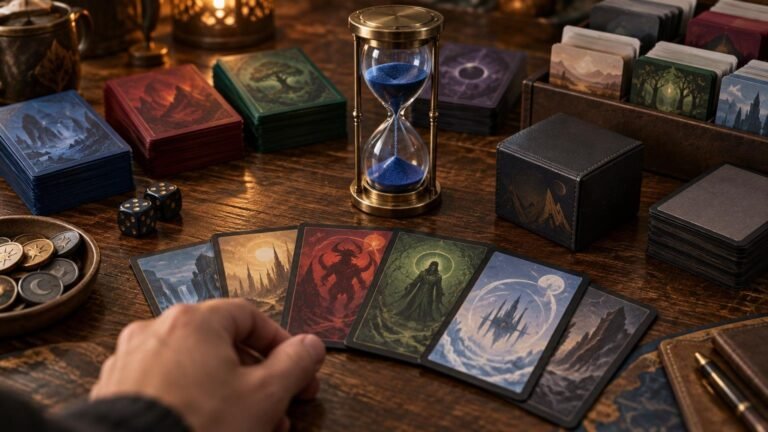
A pick timer can keep a familiar, competitive Cube moving, but strict timing can punish newer players and obscure narrow archetypes. Choose the clock only after defining the draft format.

A practical spreadsheet system for tracking an MTG cube without logging every trivial movement. Use one inventory, one change log, and an exception-based reset workflow.

A useful Cube token package follows the cards players draft, not a generic checklist. Estimate simultaneous demand, prioritize readable designs, and keep tokens distinct from unofficial proxy cards.

A practical framework for supporting self-mill, recursion, reanimator, sacrifice, discard, and graveyard value without forcing them into one narrow deck.

A replacement cube proxy must match the rest of the environment closely enough that drafters cannot identify it from its back, edges, sleeve or handling.

Learn how to build a lands-matter Cube package around landfall, recursion, utility lands, or sacrifice without weakening fixing or filling packs with narrow cards.

Choose the right two-player Cube format by comparing setup, information level, card exposure, deck focus, and the way each method changes card evaluation.

Reset and document your MTG Cube after every event, but wait for recurring draft evidence before changing the list. This guide provides a practical cadence for tuning, inventory, sleeves, storage, and replacement batches.

A practical guide to six-player Cube drafting, covering the standard 3×15 setup, card-pool math, optional burn variants, and design implications.

A practical MTG Cube update log template for recording additions, cuts, design hypotheses, draft observations, version history, and cards that need reprinting.
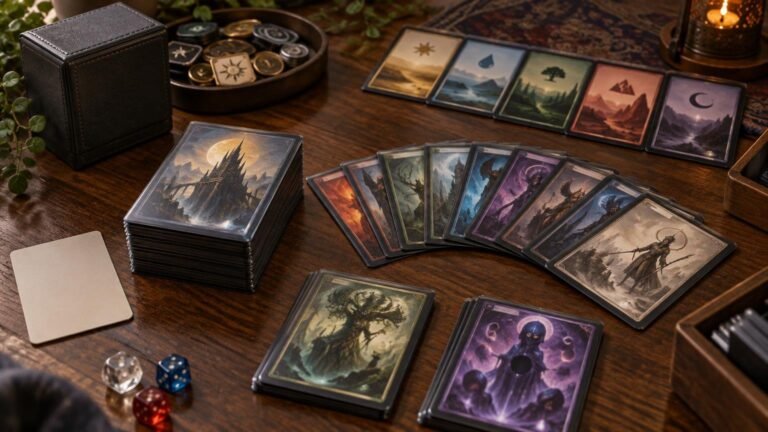
In a conventional Cube draft, every card you drafted but did not put in your main deck becomes your sideboard. Here is how to handle swaps, deck size, basic lands, new matches, and Cube-specific house rules.

A practical framework for choosing cohesive Cube basics, maintaining deckbuilding clarity, and preparing a land station or print list.

Cube signals are patterns, not promises. Learn how power outliers, singleton variance, fixing, gold cards, and pass direction change the decision to stay or pivot.

Protect your Cube in transit and make cleanup predictable with a practical workflow for storage, support pieces, inventory, randomization, and updates.