

TLDR
- Shards succeeds because it rewards three colors while still letting you play the game on two.
- Its best cards are aspirational without being “only good in one deck,” which keeps drafts open.
- The set’s faction mechanics mostly push creature combat, and the overlaps between shards create discovery.
- The big caution for cube designers: themes that do not overlap (Esper artifacts, sometimes) can draft like islands.
- If you want a Shards-ish cube, start with flexible costs + generous fixing + “opt-in synergy” signposts.
Magic releases come fast. That’s exactly why a rewind to Shards of Alara cube design is worth it. Shards (2008) is one of the cleanest examples of “multicolor, but still interactive” Limited design, and it holds up as a reference model for cubes that want real lane tension without hard rails.
If you want to follow along, skim the set first on Scryfall using set:ALA. Pay attention to repeat mechanics and how many cards hint at a third color instead of demanding it.
Why Shards still matters for cube
A lot of modern multicolor environments solve drafting with signposts and guardrails: “Here are your 10 pairs, pick one.” Shards does something different. It gives you identity (five shards) but builds the incentives so you can drift, pivot, and splash without your deck collapsing.
That design goal is extremely cube-relevant because cube drafters love flexibility, but cube designers need structure. Shards shows one way to get both.
Macro lever 1: Aspirational “rule of cool” rares that still draft well
Shards was the first set with mythic rares, and it wears that moment loudly: big monsters, big spells, big “I want to do that” energy. The trick is that many of the splashiest hits invite building around them, instead of requiring a narrow checklist.
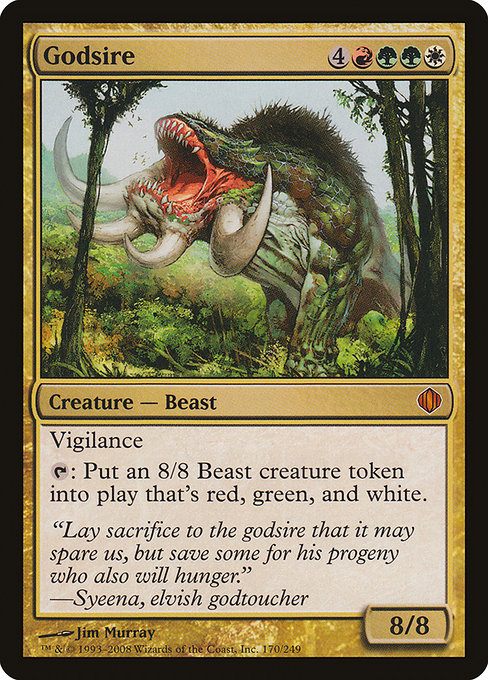



 : Create an 8/8 Beast creature token that's red, green, and white.
—Syeena, elvish godtoucher
In cube terms, these cards do two jobs at once:
- They create draft goals (“I’m Naya ramp now”), and
- They generate table stories without forcing parasitic support.
If you want that feeling in your cube, aim for bombs that:
- are playable when drawn “fairly,” and
- get meaningfully better with synergy, not only functional with synergy.
This is also where Shards quietly teaches a “rare discipline” lesson: if your environment is about creature combat, your rares should still play creature combat most of the time, not skip it.
Macro lever 2: Two colors… with ambition
Shards’ best structural decision is that it rewards three colors while allowing you to operate on one or two. You see it in cards with off-color activations, cycling as an escape hatch, and payoffs that scale upward as you add colors.
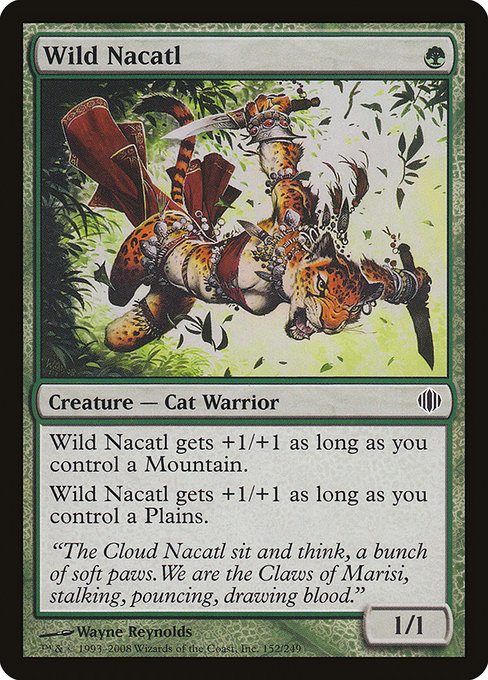
This creature gets +1/+1 as long as you control a Plains.
This is cube gold because it protects the draft from the “I first-picked a gold card and now I’m trapped” problem. You can steal this in two ways:
A) Prefer “installment-plan” gold
- Castable on 1–2 colors, upgraded by the 3rd color.
- Example patterns: off-color activations, kicker-like add-ons, cycling modes.
B) Let fixing be a plan, not a tax
Shards supports its greed with real tools: tri-lands, Panoramas, Obelisks, and a general assumption that players will get to stretch if they draft for it. In cube, that translates to: if you want three-color play, you cannot make fixing an afterthought.
If you want the Shards feel, the environment needs to say: “You can be ambitious, and I will not punish you randomly for trying.”
Macro lever 3: Faction mechanics that push combat, then overlap naturally
Shards’ named mechanics (Exalted, Devour, Unearth) all nudge you toward creature-centric games, but they do it in different ways:
- Exalted rewards attacking with one threat and building tactical turns.
- Devour turns small bodies into a scaling payoff and pressures board management.
- Unearth makes trading and removal feel less final, which keeps combat interesting.
The best part is how often these themes cross-pollinate through shared colors. Even when a mechanic is “owned” by a shard, neighboring shards can still use the pieces. That overlap is where drafts stay fresh.
The cube lesson: build “bridges,” not just archetypes
If your cube has five themes, each theme needs at least a couple of shared hooks:
- shared creature types
- shared resource (tokens, graveyard, artifacts)
- shared play pattern (sacrifice, ETB value, tempo)
Shards’ biggest miss is also instructive: Esper’s artifact identity sometimes drafts like a sealed pod inside the pod. When a theme only speaks to itself, the draft loses tension.
Micro lever: “Opt-in synergy” signposts that are good cards first
Modern Limited signposts are often explicit and narrow: “Play this deck or don’t.” Shards has a bunch of cards that suggest synergy while still being solid on rate. That’s the sweet spot for cube, because it pulls drafters into lanes without handcuffing them.
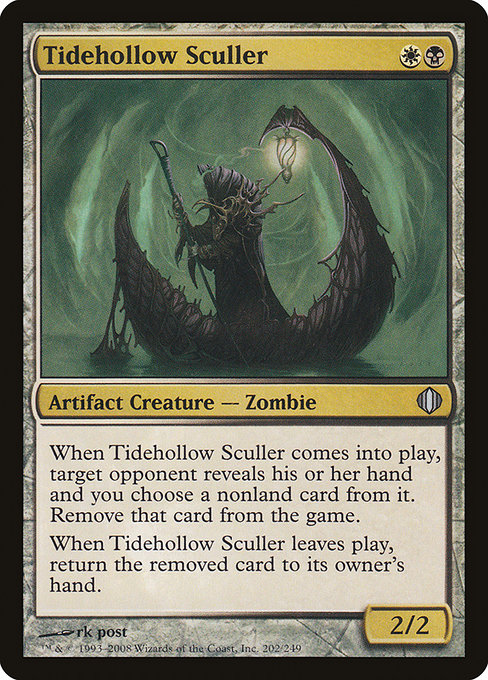

When this creature leaves the battlefield, return the exiled card to its owner's hand.
Why cards like this work in cube:
- They’re playable immediately (no “dead until combo” feel).
- They create interesting incentives (blink, recursion, sacrifice, artifact synergies).
- They scale with player knowledge, which is perfect for repeat drafts.
Rule of thumb for cube signposts:
Make your “directional” cards be cards you’re happy to maindeck even when the synergy doesn’t fully show up.
A Shards-inspired cube framework you can actually use
If you want to apply Shards’ design to a cube (or just steal the parts that fit), here’s a practical framework:
The Shards Triangle
You want all three corners, or the experience collapses.
- Aspirational payoffs (big rares, big engines, big goals)
- Flexible costs (two colors function, third color upgrades)
- Fixing density (enough that ambition is skill-tested, not roulette)
Common failure mode
Cube designers add the payoffs and the gold cards, but forget the flexibility. Then drafts become:
- forced lanes,
- mana screw stories,
- and decks that feel samey because everyone is scared to pivot.
Tradeoffs table: what to copy, and what it costs
| Shards design lever | What to copy into cube | What you give up |
|---|---|---|
| “Two colors, with ambition” | Castable 2-color cards with optional 3rd-color upgrades | Some cards become less “clean,” more texty |
| Combat-forward mechanics | Mechanics that reward attacking, blocking, and board play | Fewer “spell-only” games and fewer solitaire turns |
| Aspirational bombs | Big goals that still have fair gameplay lines | You must balance answers so bombs don’t snowball |
| Overlapping shard identity | Cross-archetype bridges (shared resources/play patterns) | Harder design work than isolated archetypes |
| Real fixing support | Lands and mid-tier fixing that show up often enough | More slots devoted to mana, fewer cute spells |
Printing note (only because it changes cube night)
If you build a Shards-inspired cube and you want it to draft smoothly, the physical experience matters more than people expect. Three-color environments create more board complexity and more “read this card across the table” moments.
That’s where consistent readability and consistent sizing stop being luxury and start being part of the design. If you want the “one cohesive set” feel for a custom list, this is the practical side of it: stable contrast, uniform cuts, sleeves-first handling. (PrintACube’s approach is summarized here: Our Printing.)
FAQs
Is Shards of Alara a good template for a multicolor cube?
Yes, especially if you want multicolor to feel like rewarded ambition rather than mandatory gold piles. Copy the flexibility patterns, not just the shard names.
How do I keep three-color themes from becoming isolated “mini-cubes”?
Force overlap on purpose. Every theme should share at least a couple of bridges with neighbors: tokens, sacrifice, ETB value, graveyard recursion, artifacts that any deck can use, and so on.
Do I need a lot of gold cards to get the Shards feel?
Not necessarily. Shards’ feel comes more from mana incentives and flexible costs than from raw gold density. You can get a Shards vibe with fewer gold cards if your fixing and upgrade patterns are doing the work.
What’s the biggest Shards mistake to avoid in cube?
A theme that only pays off inside itself. If your “Esper package” is artifacts that only artifacts care about, drafters either commit early or ignore it completely. Give the package cards that other decks want too.
Does this work at higher power levels?
It can, but you have to respect the power-band math: faster environments punish stumble turns more. If the cube is high-speed, your fixing and cheap interaction need to keep up or your ambitious decks will just die with spells in hand.