
This post helps Commander players and cube drafters decide if a Commander MTG cube is right for their group by explaining what it is, how it plays, and what design goals change when you move from 40-card 1v1 cube to multiplayer Commander-style drafts.
TLDR
- A Commander MTG cube is a curated card pool built to draft Commander-ish decks, usually in 4-player pods, instead of drafting 40-card 1v1 decks.
- The biggest difference is constraints: you draft around a commander and color identity, so you need more legends and more fixing than “regular cube.”
- Most Commander cubes borrow the “Commander draft” feel: bigger packs, bigger decks, and multiplayer pacing.
- Commander cubes shine for groups who love Commander but want variety without everyone bringing a tuned list.
What is a Commander MTG cube?
A Commander MTG cube is a cube designed so that after the draft, everyone ends up with a deck that plays like Commander: you have a commander (or commanders), you build within color identity, and you play multiplayer games where politics and big board states matter.
Think of it as “you made your own Commander draft set.” Instead of cracking packs from a retail product, you curate the whole environment: the commanders you want people to see, the archetypes you want supported, and the power band you want your table to live in.
A lot of Commander cubes include a built-in “safety valve” commander so nobody gets stranded. A classic example is:
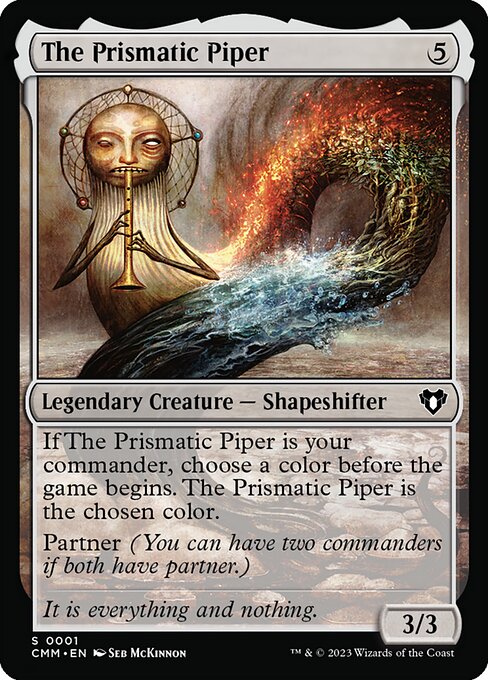

Partner (You can have two commanders if both have partner.)
Who Commander cube is for
Commander cube is amazing for the right group, and kind of miserable for the wrong one. Here’s the quick read.
Great fit if your group:
- Likes Commander’s “big turns and big stories,” but wants the freshness of drafting
- Often has exactly four players (a normal Commander pod)
- Enjoys building on the fly and arguing (politely) about picks
- Wants a shared power level without “my deck is a 9, yours is a 7” conversations
Probably not a fit if your group:
- Wants fast, clean, competitive 1v1 matches
- Gets frustrated by multiplayer board stalls and table politics
- Loves hyper-consistent synergy decks and hates draft variance
- Only wants to sleeve up once and play for a month (Commander cube asks you to draft often)
How a Commander cube draft usually works
There isn’t one universal ruleset, but most Commander cubes land in one of these lanes:
The common “Commander draft” lane
This version tries to feel like drafting a Commander-focused set: bigger packs, more picks, 60-card decks, then you play multiplayer.
What that does well:
- Keeps drafting time reasonable
- Gives you enough cards to build something coherent
- Makes commanders show up often enough that people do not get color-locked
The “commanders first” lane
Many groups draft commanders separately (or seed them into packs) so everyone has real build-arounds early. This helps drafters commit to an identity without praying a legend shows up in pack three.
The “Commander vibes, faster games” lane
Some Commander cubes intentionally shrink things to speed up the night: smaller decks, lower life totals, fewer inevitability engines. You still get the commander experience, just on a tighter clock.
The “full Commander deck” lane
A few groups go all the way and draft toward 99-card decks, often with extra draft packs and an additional land/fixing process. It’s a marathon, but it can be a blast if your table wants a whole evening around one draft.
How Commander cube differs from “regular” cube
If you only remember one thing, remember this: Commander cube is not regular cube with extra cards. It is a format shift.
Here are the practical differences that show up at the table:
1) Multiplayer changes what “good” looks like
In 1v1 cube, tempo and efficiency rule a lot of games. In Commander cube, you have three opponents, bigger life totals (usually), and more complicated boards. Cards that scale well to multiplayer, generate repeatable value, or affect multiple opponents tend to matter more.
2) Your commander is a deckbuilding constraint, not just a cool card
In normal cube, you can stay open for a while and “end up” in a deck. In Commander cube, your commander (and color identity) narrows your options hard. That means your cube’s number one job is commander access: enough legends, enough flexible legends, and a plan for when someone’s draft goes sideways.
3) Mana density has to go up
Bigger decks plus color identity plus multiplayer means you need more fixing and more ramp than a typical 40-card environment. If you do not, you get the two classic Commander cube fails:
- “My deck is fine but I can’t cast my spells.”
- “The game is stuck because nobody can progress.”
4) Pacing tools matter more than you think
Commander cube games naturally trend long. If you do nothing, boards gum up. Commander cubes need deliberate ways to end games: sweepers (not just Wraths, also soft resets), evasion, inevitability, and pressure valves that keep the table moving.
Commander cube vs other cube formats (quick comparison)
| Feature | Traditional 40-card cube | Commander MTG cube | Commander draft (retail set vibe) |
|---|---|---|---|
| Typical games | 1v1 | 4-player free-for-all | 4-player free-for-all |
| Deck size | 40 cards | Often 60 cards (varies) | 60 cards |
| Main constraint | Draft pool only | Draft pool + commander color identity | Draft pool + commander color identity |
| Biggest design pressure | Curve and archetype balance | Commander access + fixing + pacing | Commander access + coherent archetypes |
| Common failure mode | Non-games from busted starts | Color-lock and board stalls | Color-lock and awkward mana |
The 3 priorities that make a Commander cube work
If you want your Commander MTG cube to draft cleanly, focus on these in order.
- Commander access: Make it hard for a drafter to end up without a viable commander in their colors. Flexible commanders (monocolor, partner-like options, backgrounds, and similar designs) do a ton of work here.
- Mana density: You need enough fixing and ramp that 60-card multiplayer decks can actually function. This is the easiest place to “cheat” in a good way by adding more lands and rocks than you think you need.
- Pacing tools: Plan for movement. If your games keep turning into “huge boards, nobody can attack,” you are short on wipes, evasion, or inevitability.
Commander cube math in one glance
Commander-style drafting eats more cardboard than normal cube.
A simple way to sanity check your plans:
- Traditional cube baseline: 8 players × 3 packs × 15 cards = 360 cards drafted
- Commander-style baseline: 8 players × 3 packs × 20 cards = 480 cards drafted
So if you want the Commander-draft feel, a cube that’s “comfortable” at 360-card usage will feel small fast. In practice, many groups end up liking a larger cube because it preserves replayability while still showing enough commanders and fixing.
Tips that make a Commander cube night feel smooth
A Commander cube can be the best game night you run, if the logistics don’t fight you.
- Basics station: Have basics ready, and have enough for two pods if you split into multiple 4-player games.
- Table clarity: Multiplayer boards get crowded. Prioritize readability and consistent card presentation so people spend time playing, not squinting.
- Timebox the build: Commander cube deckbuilding can sprawl. A simple “build window” keeps the night moving.
- Have a plan for 6 to 8 players: Two 4-player games after the draft is often cleaner than an 8-player free-for-all.
FAQs
How big should a Commander MTG cube be?
Big enough that commanders and fixing show up consistently, but not so big that synergy evaporates. If you want a Commander-draft style night with 8 players, plan around roughly 480 cards being drafted, then decide how much variety you want beyond that.
How many commanders do I need?
Enough that people do not get trapped. In practice, commander density is the first knob to turn up when drafts feel bad, even before you touch archetypes.
Do I have to draft commanders separately?
No, but separating commanders (or seeding them into packs) is one of the easiest ways to reduce color-lock and make drafts feel intentional instead of lucky.
Can a Commander cube work with only four players?
Yes, and it’s one of the best reasons to build one. A four-person pod is the natural Commander group size, and pick-two style draft rules also keep the process fast.
Should a Commander cube be singleton?
It can be, but a lot of Commander cubes bend singleton for practical reasons: extra fixing, extra rocks, and other “glue” cards that make decks function more often.