

This post helps cube owners learn how to shuffle an MTG cube quickly and consistently by using sleeve-friendly methods that actually randomize the whole pool, so packs feel fair and cube nights start on time.
TLDR
If you want a fast answer to “how do I shuffle my cube MTG,” stop trying to mash a 540-card brick. Split the cube into manageable piles, shuffle those piles, then remix cards between piles in a repeatable way. The goal is not “shuffle harder,” it’s “move cards across the whole cube” so clumps cannot survive.
You finish a draft, everyone had a great time, and then the cube turns into a pile of mini-decks and archetype stacks. Now comes the part nobody puts on the highlight reel: shuffling. If you have ever searched “how to shuffle a cube MTG” or “how to randomize a cube MTG,” you already know the real problem is time and confidence, not technique.
The good news is you can get fast, fair, sleeve-friendly randomization without turning cube cleanup into a second game night.
What “randomized” actually means (and why cubes feel harder)
In Magic terms, “randomized” means nobody should have useful information about the order or position of cards. That is the standard you are aiming for with a cube too, even in casual play, because predictable clumps change drafts in obvious ways.
The trap is that cubes start from a “not random” state more often than normal decks do. Many cube groups sort cards back into colors, guilds, lands, or even the decks they just drafted. If you just shuffle within those chunks, you are polishing the outside of the problem instead of fixing it.
The cube-shuffle framework that actually works
Here’s the mental model that makes cube shuffling click: break, shuffle, remix.
You break the cube into piles small enough to shuffle cleanly in sleeves. You shuffle inside each pile to remove local order. Then you remix between piles so cards migrate across the entire cube, which is the step that stops “last draft’s deck” from showing up as a suspiciously similar pack.
If you remember only one thing, remember this: repeated shuffling inside the same pile has diminishing returns if piles are not exchanging cards.
How to shuffle an MTG cube: choose a method that fits your night
The best method depends on whether your cube is already mixed, or whether it was stored neatly sorted. Use the table as a picker, then follow the matching section.
| Method | Best when | What you do | Ballpark time (540) | Randomness confidence |
|---|---|---|---|---|
| Broadcast Shuffle | You want the fastest “just works” routine | Shuffle several piles, then redistribute chunks into new piles and repeat a couple rounds | ~10 minutes solo | High |
| p-Piles Routine | Your cube was stored sorted by color/type | Deal into p piles, shuffle each pile, recombine, repeat the cycle | ~10–15 minutes solo | High (very consistent) |
| Pass-and-Shuffle (team) | You have 3–8 people willing to help | Everyone shuffles a pile, then passes it so piles exchange hands repeatedly, then do one final remix | ~5–10 minutes with help | Medium–High (depends on structure) |
Times are realistic for sleeved cubes when piles are kept “mashable.” If your piles are too big to shuffle comfortably, the method slows down and the results get worse.
The Broadcast Shuffle (fast, fair, and easy to repeat)
If you want one default answer for “how to shuffle MTG cube,” this is it.
Start by splitting the cube into 4–8 piles, whatever size you can mash shuffle cleanly without sleeves catching. Mash shuffle each pile a few times. Now the key move: take each pile and split it into equal chunks, then distribute those chunks into new piles so every new pile receives a portion of every old pile. After that, mash shuffle the new piles again. Do another broadcast round if your cube started heavily sorted.
This feels almost too simple, but it solves the core cube problem: it forces cross-mixing, so color chunks and archetype clumps cannot stay together just because they started together.
The p-Piles Routine (the “my cube is stored sorted” solution)
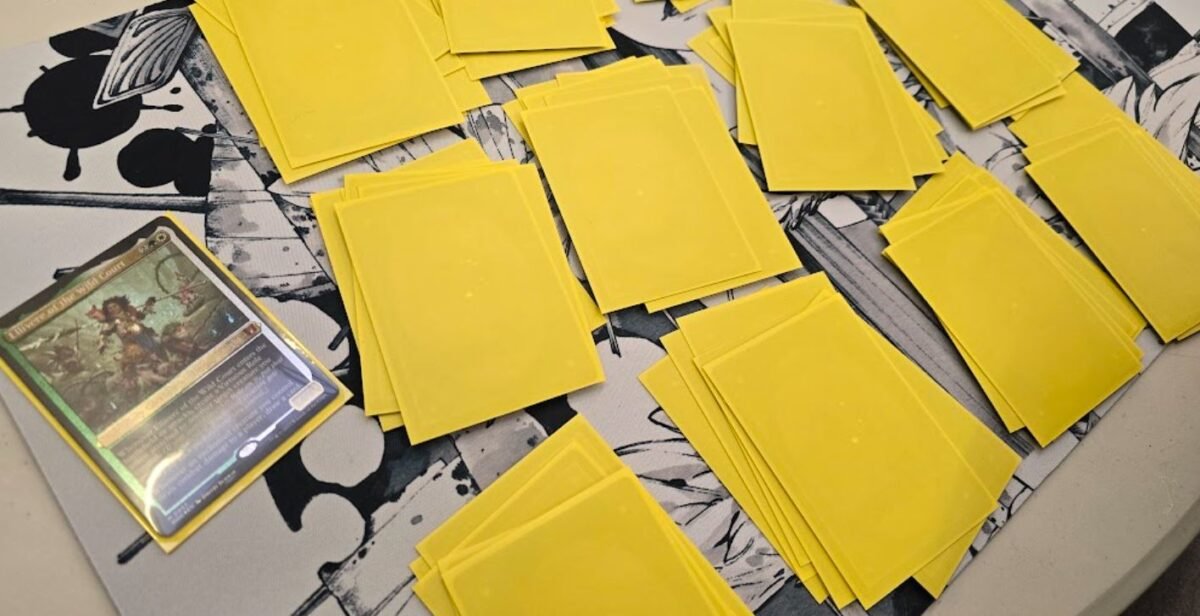
If your cube lives in perfect order between drafts, use a routine that is boring in a good way. Choose a number of piles (p) such that each pile is easy to shuffle by hand in sleeves. Deal the cube out one card at a time into those p piles until you run out of cards. Shuffle each pile well, then stack the piles back together. Repeat the cycle once more if you started from a highly sorted state.
This approach is popular because it is repeatable and predictable. You are not guessing whether you “shuffled enough,” you are running a process that makes it hard for structure to survive.
Pass-and-Shuffle for groups (make helpers actually help)
“Everyone grab a stack” works only if piles exchange cards often. The goal is not to have six people shuffling in parallel forever, it’s to have six people shuffling while piles rotate so every pile absorbs cards from other piles.
Give each person a pile sized for comfortable mash shuffling. After a short shuffle window, everyone passes their pile left. Repeat a few passes. Then do one quick remix step (either a light broadcast redistribution or a simple recombine-and-cut) to ensure cards are not staying in “person-shaped” chunks.
If you add structure, a group can randomize a cube faster than any solo method. If you do not add structure, you can spend longer and still keep clumps.
Sleeve-friendly habits that matter more than you think
These are the small rules that keep shuffling fast and keep your sleeves alive:
- Keep piles mashable. If the stack fights you, split it. Big piles cause sloppy shuffles and bent corners.
- Mash shuffle, don’t bend. Avoid any shuffle that forces a sleeve lip to flare or corners to crease.
- Use a clean surface. Dust and grit turn into sleeve scratches and sticky corners over time.
- Replace problem sleeves early. One crunchy sleeve becomes the card everyone can “feel,” which defeats the point of randomization.
- Stay consistent. Mixing sleeve brands or wildly different sleeve wear levels makes shuffling slower and creates accidental markings.
Quick “did I randomize enough?” checks
If your cube was already mixed from last time, one structured method cycle is usually enough. If it was stored sorted, you should expect at least two cycles of a remixing method.
A simple sanity check is to pull a few sample 15-card “packs” off the top after your shuffle. If you keep seeing obvious runs (like a big color clump or a familiar mini-deck), you do not need to panic. You just need one more remix cycle, because clumps are a mixing problem, not a “shuffle harder” problem.
Common cube shuffle mistakes
These are the patterns that create the “why are packs like this?” feeling:
- Pile dealing and stopping. It is great for counting and distribution, but it is not the same as true randomization by itself.
- Shuffling one pile forever. If piles are not exchanging cards, clumps can survive far longer than people expect.
- Recombining piles without remixing. If each pile stays “itself,” you are just re-stacking order.
- Overstuffing piles. When piles are too big to shuffle cleanly, you get slower and less random at the same time.
FAQs
Is pile shuffling enough to randomize an MTG cube?
Not on its own. Dealing into piles is useful as a counting and distribution step, but cube randomization needs real shuffling plus a remix step that forces cards to move across the whole cube.
How many times should I mash shuffle each pile?
For cubes, the bigger win is not “more shuffles per pile,” it’s “did I remix between piles?” Do a few solid mash shuffles per pile, then focus on one or two rounds of redistribution so piles exchange cards.
What is the fastest way to shuffle a 540-card cube alone?
Broadcast shuffling is a strong default because it combines manageable pile shuffles with forced cross-mixing. If your cube was stored sorted, run an extra broadcast round.
What if I want packs to feel less swingy than fully random?
That is a collation choice, not a shuffle choice. Some groups intentionally constrain distribution (for example, to reduce color clumps). If you do that, do it on purpose and document your method so your cube stays consistent.
Does sleeving make cube shuffling better or worse?
Both. Sleeves make mash shuffling safer for cards, but they punish bad technique. The fix is simple: keep piles smaller and rely on remix cycles instead of brute force.