
TLDR
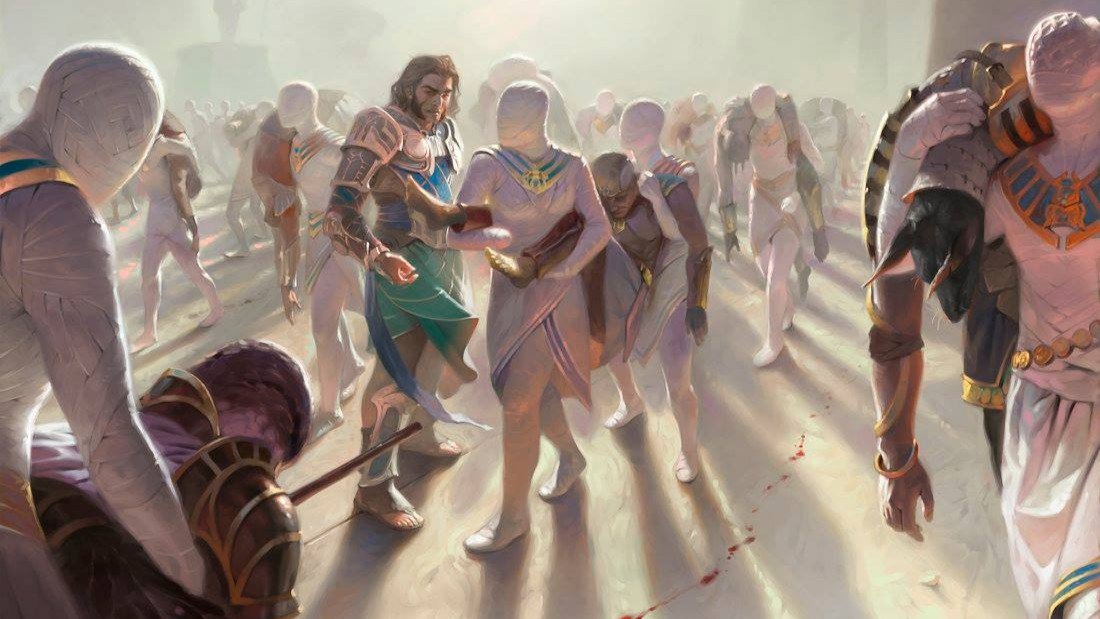
- Anointed Procession is the clean, mono-white “double my tokens” enchantment at
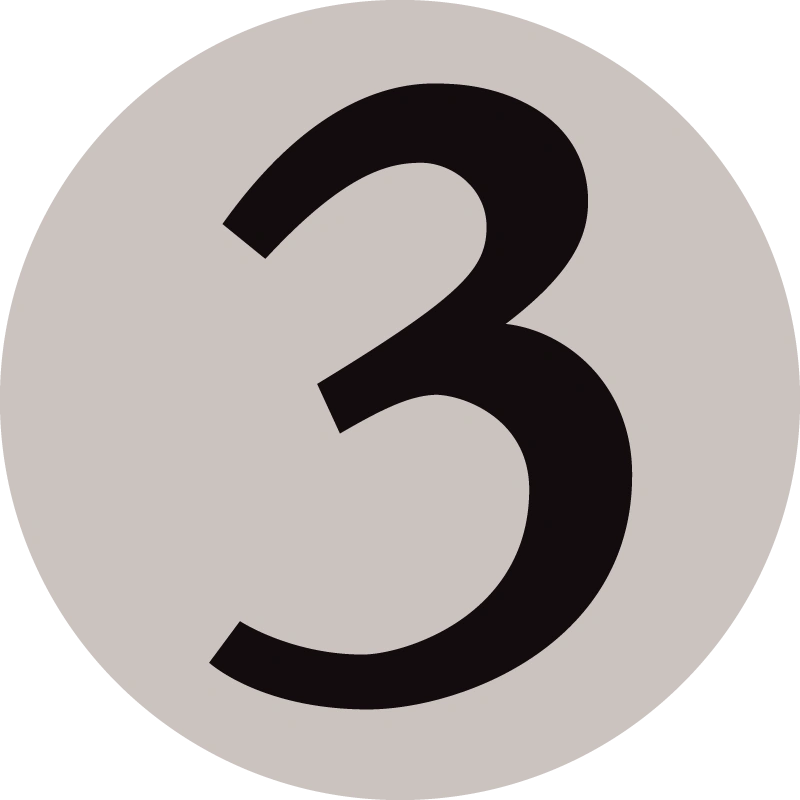
 , and it tends to stick because enchantments eat less removal than creatures in a lot of metas.
 - It’s basically Parallel Lives in white, while Doubling Season is the “premium” option that also doubles counters, which matters a ton for planeswalkers.
- Newer “body” versions like Mondrak, Glory Dominus trade resilience for utility (attack, block, self-protection), but also die to creature wipes.
- In Cube, token doublers can be amazing build-arounds, but only if your environment has enough token makers and the table has real answers to enchantments.
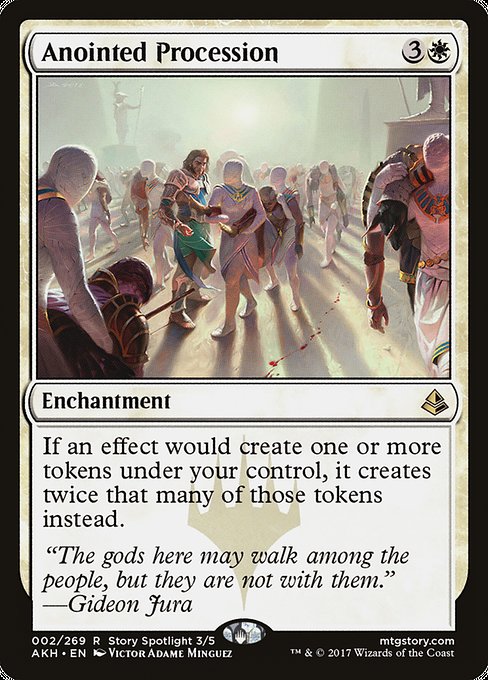
—Gideon Jura
Where Anointed Procession sits in the token-doubler ecosystem
If you’ve played any token deck in Commander, you already know the vibe: you do a normal token thing, then you do the same token thing but with a multiplier on the table, and suddenly your “fair” board becomes a math problem.
Anointed Procession’s niche is simple and powerful:
- Card type: enchantment (harder to answer than creatures in many pods)
- Rate: “baseline” doubler at
- Color identity: gives white (and Orzhov) token decks a true, permanent multiplier without touching green
The classic enchantment trio (and why it’s still the benchmark)
For a long time, the gold standard was “token doubling enchantments that do one thing, forever.”
| Card | Color | Cost | What it does | Why you’d pick it |
|---|---|---|---|---|
| Anointed Procession | White | | Doubles tokens you create | Easiest “true doubler” to splash outside green |
| Parallel Lives | Green |  | Doubles tokens you create | Same effect, green identity, classic staple |
| Doubling Season | Green |  | Doubles tokens and counters | Explosive with planeswalkers and +1/+1 counter engines |
What this means in practice
- Anointed Procession vs Parallel Lives: functionally the same job, different color. Procession is often easier to cast in 3+ colors because it’s only one white pip at .
- Doubling Season is in its own lane: it’s not “just” a token card. In Commander it supercharges counters, and in Cube it can cross into “oops, I ulted immediately” planeswalker territory.
Modern “power creep” versions: bodies, wards, and tripling
Wizards has pushed a lot of token multiplication onto creatures lately. You get extra upside, but you also accept creature fragility.
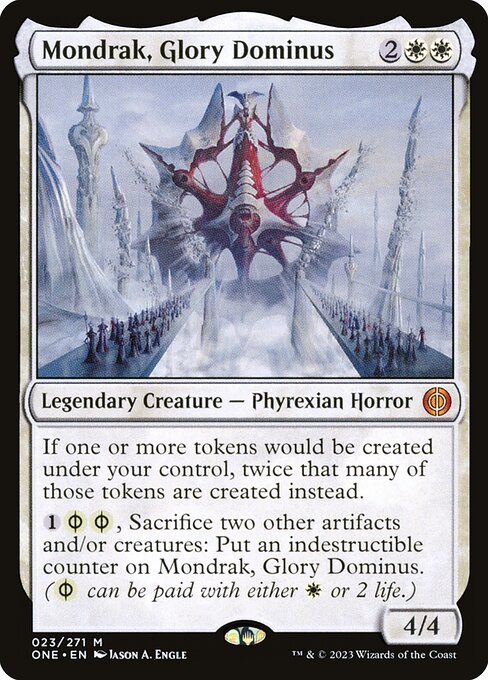
Mondrak, Glory Dominus (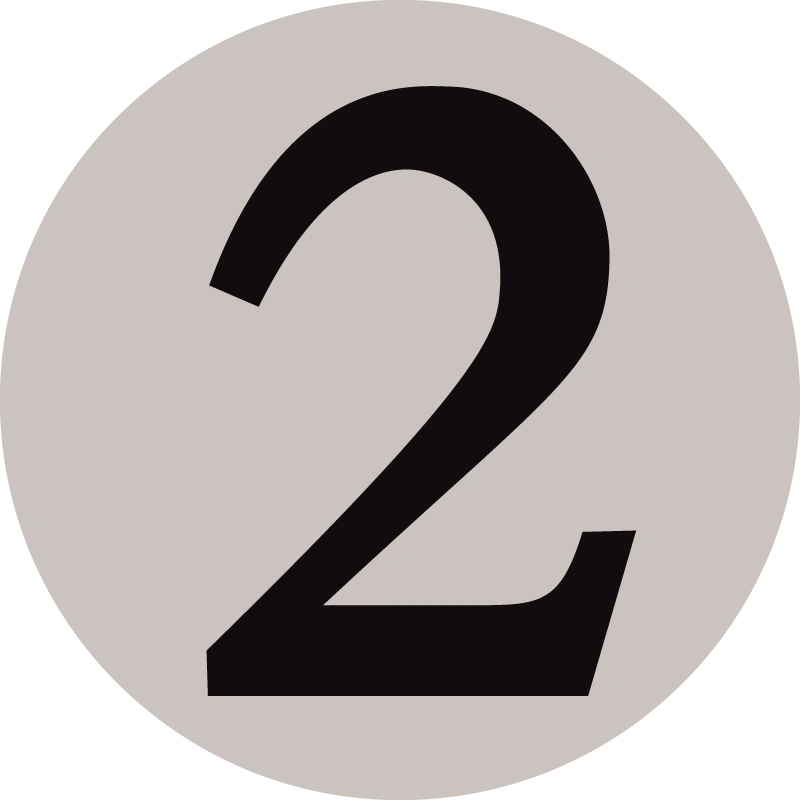 )
)
 /
/ /, Sacrifice two other artifacts and/or creatures: Put an indestructible counter on Mondrak. (/ can be paid with either or 2 life.)
Mondrak is the closest direct comparison to Procession: same basic doubling effect, same general mana value, but attached to a 4/4 body that can protect itself.
Mondrak’s edge
- Can attack and block (matters more than people admit, especially in Cube)
- Has a built-in line to become indestructible (at a real cost)
Procession’s edge
- As an enchantment, it dodges a lot of the removal people naturally pack (board wipes, spot creature removal)
- Easier to cast when you are not mono-white, since it’s rather than
Ojer Taq, Deepest Foundation ()
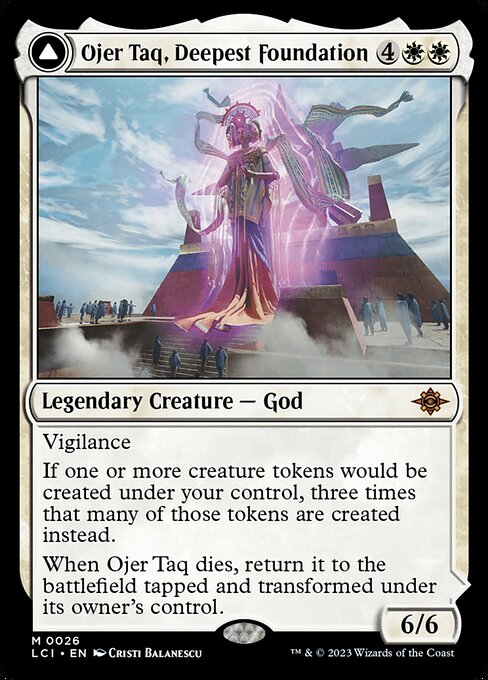
If one or more creature tokens would be created under your control, three times that many of those tokens are created instead.
When Ojer Taq dies, return it to the battlefield tapped and transformed under its owner's control.
Ojer Taq is a different promise: “what if your tokens were not doubled, but tripled?”
Two important differences that come up constantly:
- Ojer Taq specifically triples creature tokens, not all tokens. So it will not triple Treasures, Clues, Food, and so on.
- It has resilience baked in via its transform clause, so killing it is not always the end of the story.
Adrix and Nev, Twincasters ( )
)
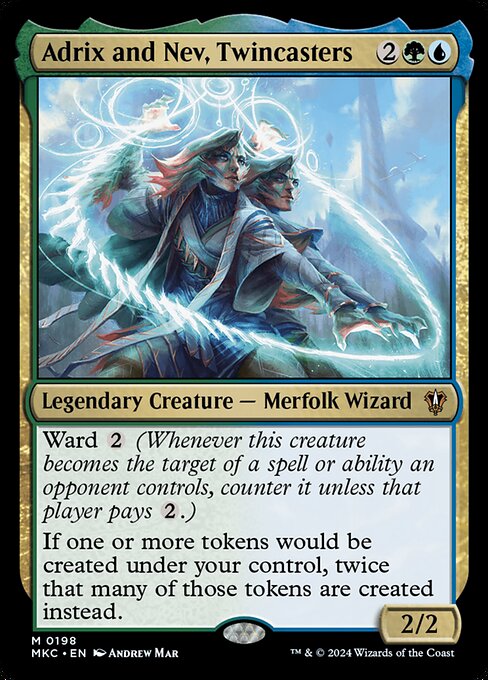 (Whenever this creature becomes the target of a spell or ability an opponent controls, counter it unless that player pays .)
If one or more tokens would be created under your control, twice that many of those tokens are created instead.
The Simic version is a classic “creature multiplier with protection” design.
- Ward makes it annoying to pick off
- Color identity locks it into blue/green, which matters a lot in both Commander deckbuilding and Cube drafting
Other close cousins (not identical, but they compete for slots)
Not every “token multiplier” is a forever-enchantment doubler. Some are symmetrical, temporary, or one-shot finishers.
- Primal Vigor (): doubles tokens and +1/+1 counters, but it’s symmetrical (everyone gets it). In Commander, that can backfire fast. In Cube, it can be a deliberate “high variance” spice card.
- Kaya, Geist Hunter (
 ): not permanent doubling, but the -2 gives you a one-turn doubler effect while Kaya remains a functional planeswalker the rest of the time. This kind of design is often better in Cube because it’s not dead if the token deck doesn’t come together.
 - Second Harvest (): a one-shot “copy all your tokens” effect. This plays less like a build-around engine and more like a “did you just die?” combat trick for token boards.
The strategic differences that actually matter
1) Resilience: enchantment vs creature reality
A lot of Commander tables run:
- lots of creature removal
- lots of creature wipes
- fewer enchantment answers
So Anointed Procession often survives long enough to be worth the setup turn, while creature-based doublers can get swept up incidentally.
In Cube, the same logic applies, sometimes even harder: many cubes have premium creature interaction, but enchantment removal density varies wildly by designer.
2) What kind of tokens are you multiplying?
This is where “token deck” means more than creature tokens.
- Anointed Procession / Mondrak / Parallel Lives / Doubling Season / Adrix and Nev: multiply tokens, which includes creature tokens and artifact tokens like Treasures and Clues.
- Ojer Taq: multiplies creature tokens only, which is perfect for go-wide and populate style decks, but less exciting for “artifact token value” shells.
3) Stacking is multiplicative (it gets silly fast)
These effects are replacement effects, and when multiple apply, you multiply.
Examples:
- 1 token with Procession + Parallel Lives = 4 tokens (2 × 2)
- Add Ojer Taq to that (for creature tokens) = 12 tokens (2 × 2 × 3)
This is why “one token maker” can suddenly represent lethal, and why these cards can feel like they “go infinite” even when they’re technically just scaling.
4) Color identity and deckbuilding pressure
Anointed Procession changed the token-doubler landscape because it gave white access to a permanent, unconditional token multiplier. That matters for:
- Mono-white token decks
- Orzhov aristocrats shells that want doubled fodder
- Non-green Commander lists that still want the “token engine” feel
What changes in Cube (and how to design around it)
In Commander, you choose your 99 and build around a multiplier on purpose. In Cube, you have to draft it, and that changes everything.
In Cube, Procession is a “do-nothing” until it isn’t
Anointed Procession is not like a planeswalker or a value creature that stabilizes you when you’re behind. If your token density is low, it becomes a trap pick.
A practical Cube rule of thumb (opinion, but it holds up in drafts):
- If you include a pure doubler like Procession at 360, make sure there are enough token producers across white (and ideally adjacent colors) that at least one drafter can reliably end up with a real package.
- If your environment is light on tokens, prefer “half-build-arounds” like Kaya that still function as normal cards.
The “answer check” matters more than you think
If your cube is loaded with creature removal but light on Disenchant effects, enchantment engines can dominate games in a way that feels non-interactive.
If you want Procession to be strong but fair, make sure your environment has:
- some enchantment removal that maindecks naturally
- enough sweepers or pressure that the token player can’t durdle forever
Cube role: build-around signpost vs win-more
Procession can play two roles depending on your cube’s power band:
- Mid-power synergy cube: a top-tier build-around that rewards drafting token makers, anthems, sac outlets, and payoffs.
- High-power or powered cube: often becomes “win-more” unless tokens are a major macro-archetype, because faster decks and broken engines compete hard for four-mana non-immediate impact.
Quick Cube checklist for running Anointed Procession
- Density: Are there enough token makers at – mana to curve into Procession?
- Payoffs: Do tokens matter beyond attacking (sac outlets, aristocrats, anthem effects, convoke, etc.)?
- Answers: Do drafters have realistic ways to interact with enchantments?
- Non-creature tokens: Do you want Procession to also turbocharge Treasure/Clue gameplay, or is that a balance risk?
Summary verdict
- Best for pure resilience: Anointed Procession (enchantment durability, easy splash at )
- Best for aggression + utility: Mondrak, Glory Dominus (body matters, self-protection line)
- Best for maximum scaling: Ojer Taq, Deepest Foundation (tripling creature tokens gets out of hand fast)
- Best “overall power ceiling” card: Doubling Season (because counters make it more than a token card, especially with planeswalkers)
FAQs
Does Anointed Procession double Treasure and Clue tokens?
Yes. It doubles any tokens you create under your control, not just creature tokens.
Is Mondrak strictly better than Anointed Procession?
Not strictly. Mondrak offers more board presence, but it is also easier to answer with the removal people already play. Procession is often harder to remove incidentally.
Do token doublers stack?
Yes, and they stack multiplicatively. Two doublers turn 1 token into 4, not 3.
Why is Doubling Season such a big deal in Cube?
Because doubling counters can make planeswalkers enter with enough loyalty to ultimate immediately, which can swing games hard. That can be a feature or a bug depending on your cube’s goals.
How many token makers do I need in Cube to justify Procession?
There’s no single magic number, but if your drafts regularly produce “token decks” that feel real, you’re close. If token decks only happen when someone opens one broken payoff, you probably want more token makers or a less narrow payoff.