
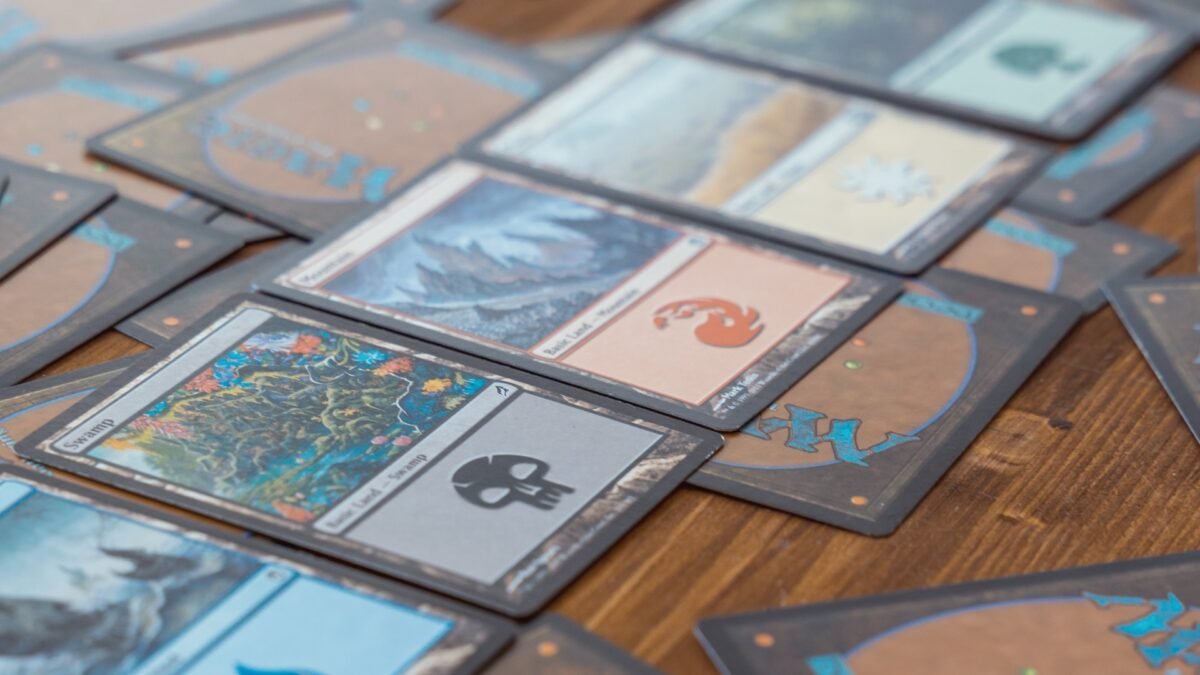
If you’ve ever lost a cube match with a hand full of absolute heaters, you already understand the MTG mana curve at a gut level. Your cards were “better,” but your turns were empty. Your opponent played real Magic on turns 2–5, and you were basically goldfishing a hand of wishful thinking.
A good MTG mana curve is less about a pretty bell shape and more about one question: what are you doing with your mana each turn of the game? Once you build around that, your drafts get cleaner, your decks get faster, and you stop dying while holding your “inevitable” six-drop.
TLDR
- A mana curve is a turn-by-turn plan, not just “average mana value.”
- Use turn relevance: count cards where you actually want to cast them, not where they technically fit.
- In cube, a good curve is how you avoid non-games and make your deck’s plan happen.
- When two picks are close, the cheaper card usually makes your final 40-card deck work more often.
Mana curve is a turn-by-turn plan, not a spreadsheet
The classic trap is thinking “I have enough one-drops” because your deck includes a bunch of one-mana spells. But a one-mana combat trick is not a “turn one play” in the way a one-drop creature is. Same mana value, totally different job.
That’s the core of curve thinking: each mana value is really a window of time. Turns 1–3 are about establishing the game (pressure, setup, interaction). Turns 4–6 are about pivoting (stabilize, break parity, close). Turns 7+ are where your deck’s top-end gets to matter.
If your list doesn’t reliably do something in the early windows, the late game doesn’t matter because you never arrived.
The Turn Relevance Test
Here’s the simplest upgrade you can make when building a cube deck:
When sorting your curve, ask:
“If I have exactly N mana on turn N, am I happy casting this right now?”
- If yes, it’s an on-curve card for that mana value.
- If no, it’s an off-curve spell (even if it costs that much).
This mirrors Wizards’ “turn relevance” idea: separate what you can cast from what you actually want to cast at each point in the game. The practical result is huge: your curve stops lying to you.
How it looks in practice:
- A one-mana trick often belongs below your real one-drops, because you don’t plan to cast it on turn 1.
- A four-mana value engine usually belongs on your main curve, because you’re thrilled to play it on turn 4.
- Flexible cards (X spells, cost reduction, cycling) go where you expect to use them most often.
A cube-friendly 40-card curve template
Most cube draft decks end up around 17 lands (sometimes 16 for low-curve aggro, sometimes 18 for slow control or heavy splashes). From there, think in on-curve plays, not total spells.
Below is a practical starting point for your on-curve pile (your “I’m happy to cast this now” row). Treat it like a template, then adjust for your archetype, fixing, and how interactive your environment is.
| Archetype | 1 mana | 2 mana | 3 mana | 4 mana | 5 mana | 6+ mana |
|---|---|---|---|---|---|---|
| Aggro (16 lands often) | 5–8 | 7–9 | 3–5 | 1–3 | 0–2 | 0–1 |
| Midrange | 2–4 | 6–8 | 5–7 | 2–4 | 1–3 | 0–2 |
| Control | 0–2 | 5–7 | 4–6 | 2–4 | 2–4 | 1–2 |
| Ramp / Big Mana | 2–4 (ramp pieces) | 4–6 | 3–5 | 2–4 | 2–4 | 2–4 |
Two notes that matter a lot in cube:
- Your twos are structural.
Even “slow” decks need to interact or develop early. Two-mana plays also double-spell cleanly later (2 + 3 on turn 5 is a classic way games swing). - Your fours are where clunk begins.
Cube hands with multiple four-drops look powerful and play awful. If you’re stuck choosing between similar cards, trimming the top of your curve usually makes your deck win more.
Curve thinking during the draft: pick to fill turns, not just power
Cube drafts love to tempt you into “value pile” territory. Curve thinking is how you resist that temptation without giving up power.
Here’s the one habit that keeps you honest: every pack, ask what turn you’re currently short on. If your deck can’t do anything meaningful until turn 3, you’re not “midrange.” You’re behind.
Curve sanity checklist (quick deck-build pass)
- Do I have at least 6–8 real plays by turn 2 (creatures, interaction, setup pieces)?
- Can I double-spell by turn 5 with reasonable frequency?
- If I miss my third land drop, can I still function (cheap interaction, cycling, cantrips, mana sinks)?
- Is my four-mana slot crowded with “good stuff” that doesn’t actually stabilize or win?
- Do I have a plan for the matchup where I’m behind early (cheap removal, blockers, life gain, sweepers)?
- If two cards are close, did I bias toward the one that keeps my curve playable?
That “when it’s close, go cheaper” rule is one of those deceptively simple heuristics that saves drafts. You can cast a cheaper card even when you draw fewer lands. You cannot cast the expensive one and hope it works out.
A little history: why “mana curve” became a thing
Mana curve wasn’t invented as a cute deckbuilding graph. It came out of competitive reality: players realized that playing a land every turn and using your mana every turn wins a shocking number of games.
The Making Magic take frames early mana curve thinking as closely tied to redundancy. Instead of treating spells as isolated snowflakes, you group them by casting cost and make sure your deck functions smoothly across turns. It’s why classic aggressive shells (think early “Sligh” ideas) cared so much about having multiple interchangeable plays at each cost. The goal was not “draw my best card,” it was “always have a play.”
Cube exaggerates this truth because the card pool is absurdly strong. If both players are doing powerful things, the one who does them on time usually gets to be the one asking questions instead of answering them.

When to break the rules (and still be right)
Good curve rules are training wheels, not chains.
- Aggro: Your curve wants to be very low, and tricks that are normally “off-curve” become on-curve because you genuinely plan to cast them early to push damage.
- Control: Your “two-drops” might be removal and counters, because your early turns are about survival, not board presence.
- Powered or fast mana environments: You still need early plays, but your curve may include more mana sinks and fewer “fair” fours because the game’s speed and swinginess changes what matters.
The point is not “always follow the chart.” The point is understanding what your deck is trying to do on each turn, then building a curve that makes that plan real.
FAQs
What’s a “good” MTG mana curve for cube draft?
A good cube curve is one that gives you real actions early and lets you spend your mana efficiently through the midgame. If you routinely pass turns 2–3 with mana up and no plays, your curve is lying or your deck is underbuilt for early interaction.
Do removal spells count in my curve?
Yes, if you actually plan to cast them on those turns. That’s turn relevance. A two-mana removal spell is a “two” for many control and midrange decks because it’s an on-curve stabilizer.
Why do my cube decks feel clunky even when the curve looks fine?
Usually one of these:
- Your “early plays” are actually off-curve cards (tricks, narrow answers, mana-hungry engines).
- You have too many fours.
- Your fixing/splash is slowing your early turns, so your curve needs to be a little lower to compensate.
How many one-drops should I play in cube?
Aggro wants a lot, often 6+ real one-drop creatures depending on the environment. Midrange and control can play fewer or none, but they still need early interaction or setup so they aren’t starting the game on turn 3.
What’s the fastest way to fix a bad curve after drafting?
Cut from the top first. If you’re debating between a medium five-drop and an extra two, the two usually makes your deck function. Then make sure your “two” slot includes both proactive plays (creatures, setup) and reactive plays (cheap interaction) so you don’t get run over.