
Yes, you can make a cube out of one MTG set. In fact, “set cube” is one of the cleanest ways to get a repeatable draft experience without constantly tweaking a giant singleton list.
If you’ve ever asked “how to build a set cube MTG” or “how to make a set cube MTG,” the whole job comes down to three decisions:
- Which booster experience are you trying to recreate?
- How many copies of each card do you need (C/U/R ratios)?
- Are you seeding packs by rarity, or just shuffling and dealing?
Let’s make those choices painless.
TLDR
- The classic set-cube “replica” recipe is 4 of each common, 2 of each uncommon, 1 of each rare, 1 of each mythic. It feels close to retail Draft and stays manageable for most modern sets.
- If you want the easiest setup, shuffle the whole cube and deal packs. If you want the closest simulation, build packs from rarity piles or “slots.”
- For sets that use Play Boosters, the pack structure is different (more variance, fewer drafted cards per pack). You can still build a great set cube, you just pick how exact you want to be.
- The biggest quality upgrades are usually: cut obvious constructed-only cards, trim feel-bad bombs, and add more fixing.
- Set cubes can evolve into plane cubes by mixing multiple visits to one world and adding a few flavorful “bonus” cards that still draft well.
What an MTG set cube is, and why it’s such a good on-ramp
An MTG set cube is a custom draft environment built from a specific Magic expansion (or sometimes a block or plane), designed to be drafted again and again. The “set” gives you a pre-built skeleton: mechanics, archetypes, removal, combat tricks, curve, fixing, and an intended gameplay speed.
That’s why set cubes are one of the easiest entry points to Cube. You can start with a faithful recreation of the Limited format you already like, then upgrade the parts that annoyed you the first time around.
Building an MTG set cube: pick your target first
Before you sort a single card, decide what you’re optimizing for. Here are three common targets, from most “retail accurate” to most “cube practical.”
Replica draft feel (most accurate): You want packs that look like the real thing, and you accept a bigger card pool and more setup.
Replayable draft nights (most practical): You want something that feels like the set, drafts cleanly every time, and sets up fast.
Set-inspired, cube-evolved (most personal): You want the plane and mechanics, but you’re happy to swap, cut, and rebuild until it feels like “your version” of the set.
That single choice drives everything else: cube size, duplicates, pack collation, and how aggressively you customize.
The classic “Draft Booster era” set cube recipe
If you’re recreating a traditional Draft Booster Limited environment, the most common starting point is still:
- 4x commons
- 2x uncommons
- 1x rares
- 1x mythics
Why this works: commons actually show up often, uncommons show up regularly, and rares/mythics still feel special. It also keeps the total cube size in a range most people can shuffle, store, and transport without hating life.
Pack building: exact collation vs shuffle-and-go
There are two pack-building approaches that both work, and the “right” one depends on your tolerance for setup.
Option A: Rarity piles (more accurate)
- Shuffle each rarity separately (usually combine rares and mythics into one pile).
- Build each pack with a fixed recipe (example: 1 rare/mythic, 3 uncommons, the rest commons).
- Result: packs look and feel like retail packs, and archetypes behave closer to the original format.
Option B: Shuffle the whole cube (fastest)
- Shuffle everything together and deal packs.
- Result: some packs will be “off” in rarity, but across a whole draft the distribution is usually close enough to feel right, especially with duplicates.
If your goal is “draft this tonight with friends,” shuffle-and-go wins. If your goal is “recreate the exact texture of the set,” rarity piles are worth it.
Cube math that keeps you honest
The baseline most cube players expect is:
- 8 players × 3 packs × 15 cards = 360 cards drafted
Now translate that into a set cube reality check:
- If your set cube is ~600 cards, you’re drafting about 60% of it each 8-player pod.
- That means you get both: “this still feels like the set” and “drafts aren’t identical.”
Set cube build recipes at a glance
| Build style | Copies per rarity | Typical cube size | Best for | What you give up |
|---|---|---|---|---|
| Replica (default) | 4C / 2U / 1R / 1M | ~600–750 | Closest to original Limited | More cards to shuffle and store |
| Lean replica | 3C / 2U / 1R / 1M | ~500–650 | Similar feel, less bulk | Commons show up less often |
| Starter set cube | 2C / 1U / 1R / 1M | ~360–500 | Faster build, easier storage | Less “commons are common” texture |
| Peasant set cube | Commons + uncommons only (often 4C / 2U) | varies | Low-variance, budget-friendly feel | Loses rare/mythic swing and novelty |
Opinion: if you’re building your first set cube, Lean replica (3/2/1/1) is a sweet spot. It drafts well, it’s easier to manage than a full 4/2/1/1, and you can always add more copies of specific commons later if an archetype needs help.
Modern reality: Play Boosters change what “accurate” means
Starting in 2024, many Standard-legal sets moved from Draft Boosters to Play Boosters, and Play Boosters have a different structure and more rarity variance. Translation for set cubes:
- If you try to reproduce packs perfectly, you need to care about pack slots, not just rarity counts.
- If you just want a fun set cube that drafts like the set, you can still use the same core idea (duplicates of commons/uncommons), then choose a pack method that fits your patience.
A practical Play Booster set cube approach
If you want a Play Booster inspired set cube that drafts smoothly:
- Start with the same “replica” inventory idea (more commons/uncommons than rares).
- Decide if you care about special inserts (bonus sheets, List cards, set-specific extra slots).
- If yes, treat them like a separate mini-module so you can tune their frequency.
- Draft 3 packs per player, but expect fewer drafted cards per pack than older Draft Boosters.
If you do want to include a set’s bonus-sheet identity, keep the “module” small enough that it adds spice without turning every pack into a slot-machine.
Customizing a set cube without losing what made the set fun
A faithful recreation is a great starting point, but the real power of a set cube is that you’re allowed to sand off the sharp edges.
Cut constructed-only cards and low-play “plants”
Some cards exist mostly to support Constructed, Commander, or niche metas, and they can be blanks or feel-bads in Limited. In a retail environment they show up rarely (often at rare or mythic), but in a cube you can still decide, “I don’t want this in my format.”
Here’s a representative example of the type of card some cube owners cut when it doesn’t create good games:
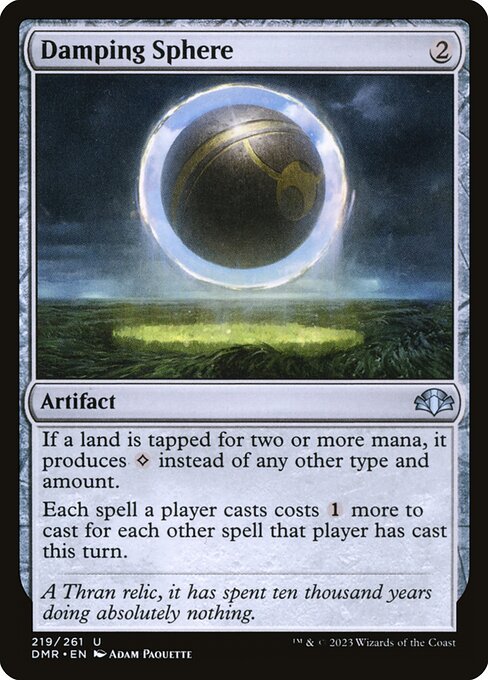

 instead of any other type and amount.
Each spell a player casts costs
 more to cast for each other spell that player has cast this turn.
The point is not “this card is bad.” The point is “does this card make draft and gameplay better in this environment?”
Trim the swingiest bombs (when they ruin your nostalgia)
Some sets are beloved… except for the handful of cards that routinely end games in the least interesting way.
If your playgroup still quotes the feeling, you’re allowed to do something about it.
“Why the hell does Ethereal Absolution exist?”
This is one of the cleanest set cube upgrades: remove the small number of cards that create one-sided games, and the rest of the set often shines harder.
Rebalance archetypes with the lightest touch possible
If an archetype underperformed in retail draft, it usually needs one of two things:
- More enablers (the “this deck can function” cards)
- More payoffs (the “this deck is worth drafting” cards)
In a set cube, you can fix that by:
- adding an extra copy or two of a key common/uncommon,
- swapping a weak signpost card,
- or importing a small number of on-theme cards from another set on the same plane.
A good rule: buff an archetype by adding redundancy, not by adding one absurd payoff that warps the whole draft.
Add more fixing if you want more two-color and splash decks
Retail sets are often stingy with fixing at lower rarities, and many cube groups enjoy smoother mana. Adding a cycle or two of fixing lands is the most “universal fun” customization you can make.
This also improves the “night-of” experience: fewer non-games, more people casting spells.
Beyond a single set: plane and theme cubes
At some point, your set cube may start asking for more room. That’s when you can step into plane cubes: combine cards from multiple visits to the same world, then curate for gameplay and vibe.
Ravnica and Innistrad are common starting points because they have deep mechanical identity and lots of card volume across many sets, which makes it easier to support multiple archetypes without scraping the bottom of the barrel.
A representative “plane identity” card for a Ravnica-forward cube:
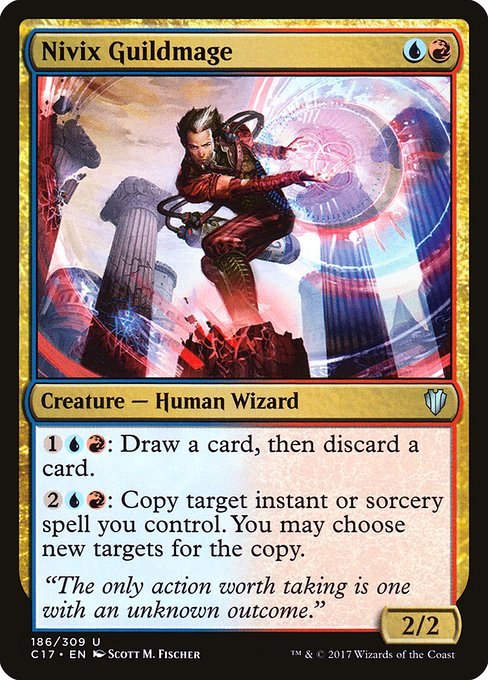

 : Draw a card, then discard a card.: Copy target instant or sorcery spell you control. You may choose new targets for the copy.
Two practical tools for building plane cubes:
- Use a plane index to find “extra” cards that belong to the world but were printed in supplemental products.
- Browse existing cubes built around that plane for inspiration and guardrails, especially for fixing density and archetype balance.
Draft-night logistics that make set cubes actually get played
This is the part that determines whether your cube becomes a weekly tradition or a shelf project.
Here’s a copyable checklist for a smooth set cube night:
- Pick the draft format and numbers upfront: booster draft, grid draft, Winston, etc. Decide pack count and pack size before anyone sits down.
- Sleeve for consistency: matching sleeves make shuffling and table readability better, especially with duplicates.
- Basic lands are separate: keep a basics station so players can build decks fast.
- Bring the boring extras: tokens you actually need, dice, pens, a few spare sleeves.
- Have a storage plan that matches your routine: either “sorted for maintenance” or “draft-ready for speed,” and switch intentionally between them.
Printing note (only where it matters): for set cubes, consistency beats perfection. Consistent cut, consistent color, and crisp rules text make shuffling smoother and drafts faster, especially when players see the same common multiple times.
Pack plans that work for real groups
| Players | Draft method | A solid pack plan | Cards drafted total | Why it works |
|---|---|---|---|---|
| 8 | Booster draft | 3 packs × 15 (Draft Booster style) | 360 | The standard baseline |
| 6 | Booster draft | 3 packs × 15 | 270 | Still feels like “real draft” |
| 5 | Booster draft variant | 4 packs × 11 | 220 | Smaller packs reduce stale wheels |
| 4 | Booster draft variant | 4 packs × 11 | 176 | Better signaling than 3×15 with 4 |
| 2 | Small-group draft | Grid or Winston | varies | Designed for low player counts |
Opinion: for 4 players, 4×11 is a great default because it keeps the draft moving and reduces the “I saw that pack three times” feeling.
FAQs
Do set cubes have to be singleton?
No. In fact, set cubes are one of the most common reasons to break singleton on purpose. Duplicates are how you make commons feel common and keep archetypes consistent draft-to-draft.
How big should my set cube be?
Most replica-style set cubes land somewhere around 500–750 cards, depending on the set and your chosen rarity ratio. Bigger cubes increase variety, but they also increase shuffle time and can dilute synergy if you don’t add redundancy where it matters.
What’s the easiest way to build a full set cube list?
Use a set cube list generator to output a full card list for your chosen set and rarity ratios, then import that list into a cube manager so you can sort, tag, and iterate.
How do I handle Play Booster “bonus sheets” or special inserts?
Treat them like a module. Keep them separate, decide how often you want them to appear, and tune from there. If your group loves the bonus sheet, increase it. If it steals attention from the set’s main themes, reduce it.
How many basic lands do I need to host?
A simple, safe hosting stash is around 40 of each basic land for an 8-person night, which covers even extreme “too many decks in the same color” scenarios.
What’s the best first customization if my set cube drafts a little flat?
Add fixing, then trim the worst feel-bad bombs. Those two changes usually raise fun per draft more than any other edits.