
This post helps MTG cube designers keep drafts interactive and balanced by explaining what makes a card “oppressive” and how to tune (or trim) those effects, so aggro, midrange, control, and combo all get real games.
TLDR
- Oppressive cube cards are the ones that regularly erase meaningful decisions or choke out an entire lane (often aggro).
- Think sound mixing board, not “max everything.” If the bass is drowning out the vocals, you lower the bass.
- Start by trimming attack-stifling cards and incidental stabilizers before you try to “fix aggro” by cramming in more one-drops.
- The fastest test: if a card wins from parity, demands a narrow answer, or shows up in every deck, it’s a tuning candidate.
- Your cube is allowed to have a curator’s ban list. That’s not a failure, it’s a design tool.
Draft environments are complex beasts. Every card you include nudges the ecosystem: removal density, mana fixing, aggression, acceleration, control payoffs, and all the weird cross-currents between them.
When you’re trying to balance those forces, the best analogy is a sound mixing board. Great mixes are not made by shoving every slider to 10. If you do, the bass drowns out the vocals and everything turns into loud mush.
Cube works the same way. New curators often “power-max” every archetype, then wonder why the drafts feel lopsided. Magic has decades of cards, and they were not designed as a single, harmonious Limited format. So if you push everything to the ceiling, you get spikes in the mix, and those spikes often show up as oppressive cards in MTG cube.
What “oppressive” means in cube (it’s not just “strong”)
A strong card is fine. Cube is built on strong cards.
An oppressive card is different. It’s strong and it tends to do one (or more) of these:
- Invalidates a whole plan (combat, small creatures, creature decks, etc.).
- Creates “no-game” patterns (one player stops participating meaningfully).
- Forces narrow answers that many decks can’t reasonably access or hold up in time.
- Autopicks itself because it fits everywhere and swings too hard from parity.
And here’s the important part: oppressive is contextual. A card can be totally reasonable in one cube and miserable in another, depending on speed, fixing, removal, and what your drafters enjoy.
The mixing-board fix: slide down the bass (before you try to push vocals past 10)
A lot of cube advice says “support aggro,” and that’s true. But if you’re already running the best aggressive one-drops and cheap interaction, you might have already hit aggro’s “10.”
If aggro is still losing, your real problem may be that you have too many anti-aggro sliders pinned high. The cleanest, most reliable lever is often subtractive design: trim the effects that suffocate aggro, rather than trying to invent new power above the ceiling.
Two kinds of anti-aggro oppression (and why one sneaks up on you)
Justin Parnell framed this in a way that’s still extremely useful:
1) “Attack-stifling answers” (the obvious offenders)
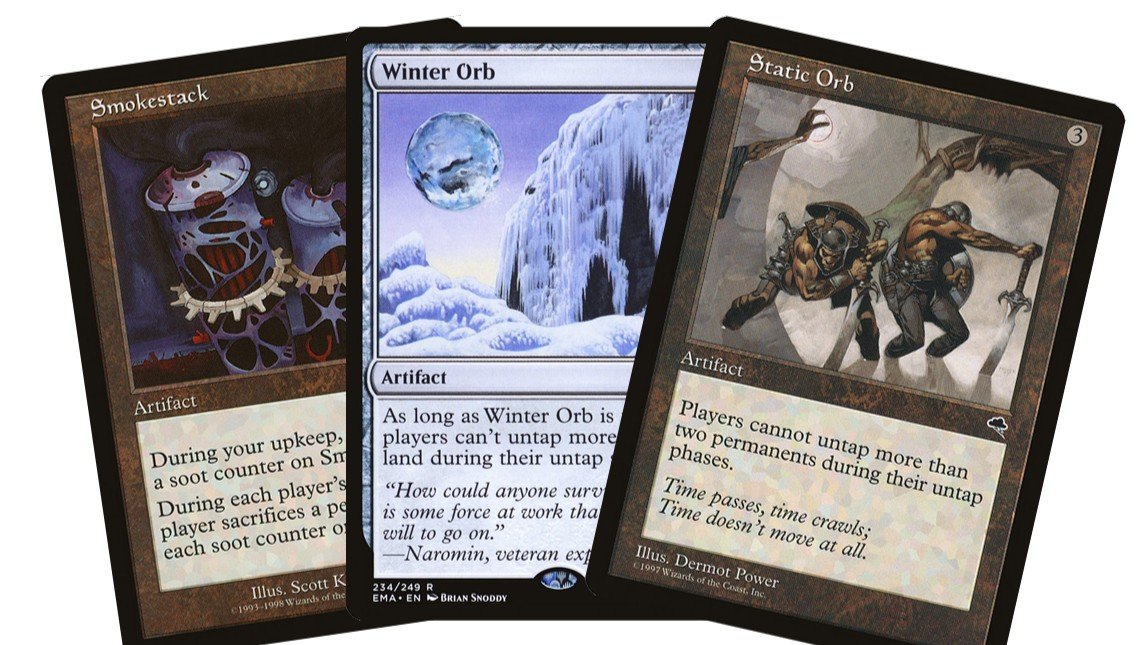
These are the cards that exist mainly to stop aggressive decks from doing their thing. They’re often narrow, often sideboard-y, and when they do show up, they can turn a game into “do you have the answer right now?”
Classic vibes include “combat doesn’t matter anymore” and “your creatures are decorative.”
2) “Incidental domination” (the cards everyone plays, and aggro hates anyway)
This group is trickier because the cards are broadly powerful. They’re maindeckable, they’re good against most decks, and they stabilize the board while also ending the game. The common thread is life gain, lifelink, and stabilizing bodies stapled to real threats.
Parnell’s key point was not “never run these,” but “manage their numbers so you don’t choke out aggro before it gets off the ground.”
A concrete example: in the SCG CON Winter Cube write-up, Parnell singled out Wurmcoil Engine as uniquely oppressive to aggressive decks, because aggro often needs an answer immediately or it gets buried in lifelink and bodies.
A famous “stress test” list (CML’s Top 8)
Christopher Morris-Lent (CML) wrote a punchy piece arguing that cube should be willing to have its own ban list, and he offered a list of eight “game-ruining” offenders as a starting point. You don’t have to agree with every pick, but the list is valuable because it highlights patterns that frequently cause problems.
Here’s one representative card from that conversation:
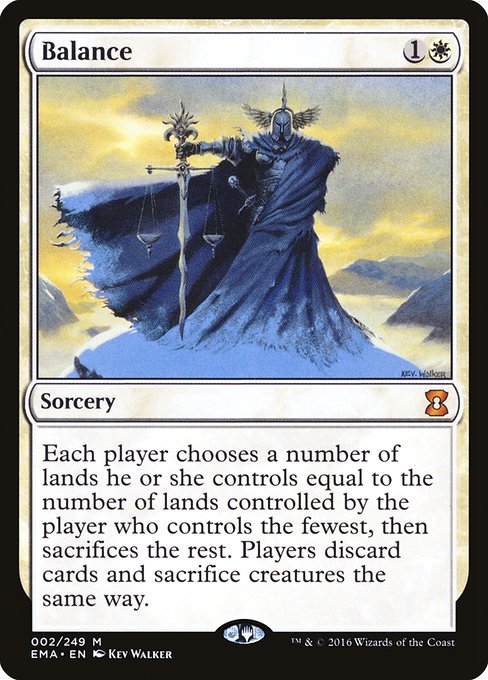

Balance is a great example of a card that can feel like it rewrites the rules of the game in a way that’s hard to interact with if you’re the wrong deck at the wrong moment.
Quick oppressive-card audit (copy this and use it after a draft night)
Use this as a fast diagnostic. If a card hits two or more, it’s a serious candidate to trim, swap, or “limit to one effect like this per color.”
- Does this card consistently end games from parity (even when the caster was behind)?
- Does it invalidate combat or make creature decks feel irrelevant?
- Does it demand a narrow answer that many decks can’t draft or hold up in time?
- Does it stabilize and win by itself (especially via lifelink or life gain)?
- Is it a colorless “best card” that every deck wants, making picks too easy?
- Does it create repetitive play patterns (the same game over and over)?
- Do drafters complain about it even when they win with it?
- Do you find yourself apologizing after casting it?
Tuning knobs that work (without gutting your cube’s identity)
You don’t have to “delete fun.” You just want the mix to be intentional.
Trim density, not necessarily the whole effect.
If you love big stabilizers, keep some. Just don’t run so many that the average non-aggro deck gets multiple “oops, I’m safe now” buttons every draft.
Prefer speed bumps over hard locks.
A card that slows combat is often healthier than one that deletes it. The goal is more decision points, not fewer.
Make answers line up with threats.
If you run early haymakers or punishing engines, make sure the cube also has realistic interaction at the timing that matters (and that it’s draftable).
Treat “colorless all-stars” as a special category.
A lot of oppressive experiences come from universally playable artifacts that flatten draft decisions and swing games. If your environment feels same-y, this is a high-leverage place to adjust.
What if your group wants oppressive gameplay?
Totally valid. Some groups love “oops, that’s disgusting” Magic.
The key is honesty in the mix: if you’re building a high-power environment where degenerate lines are the point, then oppressive cards are not a bug, they’re part of the product. Just make sure the cube also includes enough counterplay so games are tense instead of coin-flippy.
FAQs
Are oppressive cards always wrong in an MTG cube?
No. They’re only “wrong” if they push your environment away from the kind of games your group wants. In some cubes, the “oppressive” feeling is the whole appeal.
How many oppressive cube cards is too many?
There’s no universal number, but once multiple drafters feel like they “can’t draft aggro” (or can’t draft creature decks at all), you probably have too many effects that shut those plans down.
Should I fix aggro by adding more aggro cards or by cutting anti-aggro cards?
If you’re already running the best low-curve creatures and cheap burn/removal, you often get a bigger improvement by cutting or trimming the anti-aggro pressure.
What’s the fastest way to tell if a card is the problem or my drafters are misbuilding?
Watch for repetition: if different drafters in different seats keep losing to the same card pattern, and the games look non-interactive, it’s usually the environment, not the pilot.