
TLDR
- A “sac outlet” in MTG Cube usually means a repeatable way to sacrifice your own creatures at will, ideally at instant speed.
- For most cubes, you want a mix of free repeatable outlets, mana outlets, and a few one-shot “cash-in” effects (like draw spells).
- Black and red carry the archetype, but white, lands, and artifacts quietly do a ton of work.
- If your sacrifice decks feel “almost there,” you probably need more outlets, not more payoffs.
- Watch your power band: some outlets (or outlet-adjacent engines) can become the whole format if your cube is not built for them.
Sac outlets for MTG Cube are one of those “small” details that completely change how draft nights feel. Aristocrats, reanimator, token decks, and grindy midrange shells all get sharper when drafters have a real button to press.
If you have the fodder and the payoffs but the deck still plays like a pile, you are almost always missing the same thing: reliable sacrifice outlets.
What counts as a “sac outlet” in Cube?
Cube players argue about this because “sac outlet” gets used to mean three different things:
- True outlets (the classic definition)
Repeatable ways to sacrifice creatures on demand (often at instant speed). These are the glue cards. - Cash-in effects (one-shot outlets)
Cards that sacrifice as a cost to draw cards, tutor, remove something, or gain tempo. You are not looping them, but they still convert bodies into value. - Engines that force or reward sacrifice
Cards that create a sacrifice gameplan (sometimes for both players). These are not always “outlets,” but they absolutely shape how sacrifice decks function.
You can support a sacrifice archetype with all three. Just be honest about which bucket you are adding.
Sac outlets for MTG Cube: the types that matter
| Outlet type | What it does | Why you want it | Common “gotcha” |
|---|---|---|---|
| Free, repeatable | Sacrifice anytime for 0 mana | Enables triggers, protects from exile, turns every token into value | Can supercharge combos and death triggers |
| Mana repeatable | Sac at a small mana cost | Still reliable, often more “fair” | Plays slower, can be awkward under pressure |
| Tap/once-per-turn | Limited sacrifice cadence | Great for mid-power cubes and board games | Sometimes too slow for dedicated Aristocrats |
| One-shot cash-in | Sac to draw/tutor/remove | Adds redundancy and interaction | Not an “engine,” more like glue and smoothing |
| Multi-sac finishers | Sacrifice a pile at once | Ends games, breaks stalls | Needs fodder density or it is clunky |
| Lands and artifacts | Low-opportunity-cost outlets | Free-ish inclusion, makes decks consistent | Often telegraphed (tap costs) |
The Sac Outlet Checklist (what makes one “good” in cube)
When you are choosing sac outlets for MTG Cube, check these boxes:
- Repeatable: Can I do it more than once without needing another card?
- Instant-speed: Can I respond to removal and combat?
- Low friction: 0 mana is best, 1 mana is fine, 2 mana starts to feel slow.
- Board relevance: Does the card do anything besides being a button (scry, damage, counters, mana)?
- Deck overlap: Does it help multiple archetypes (tokens, reanimator, stax, midrange)?
- Not a trap: Does it require a narrow setup that won’t show up in most drafts?
Best sac outlets by color (and why they draft well)
Black: the default home of sacrifice
If you only add one category of outlets, make it black. Black gets the highest density of cheap, repeatable, instant-speed options, which is why Aristocrats feels “real” when black is open.


Staple-style black outlets to consider
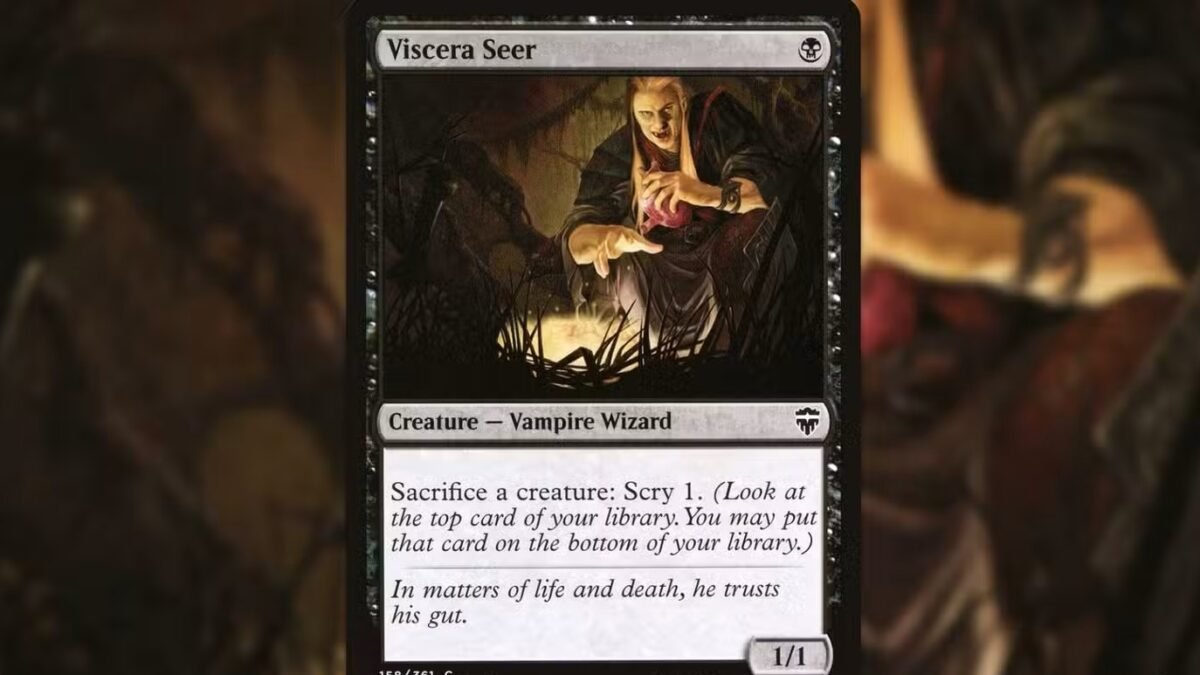
- Free + repeatable: Viscera Seer, Carrion Feeder
- Mid-game engines: Woe Strider, Yawgmoth, Thran Physician
- Value bodies: Flesh Carver, Yahenni, Undying Partisan
Why these work in Cube: they are rarely dead cards. Even outside a dedicated sacrifice deck, they turn random tokens, ETB creatures, or stolen creatures into upside.
Red: turns bodies into damage (and closes games)
Red outlets are often less about “value loops” and more about ending the game or turning throwaway tokens into reach.
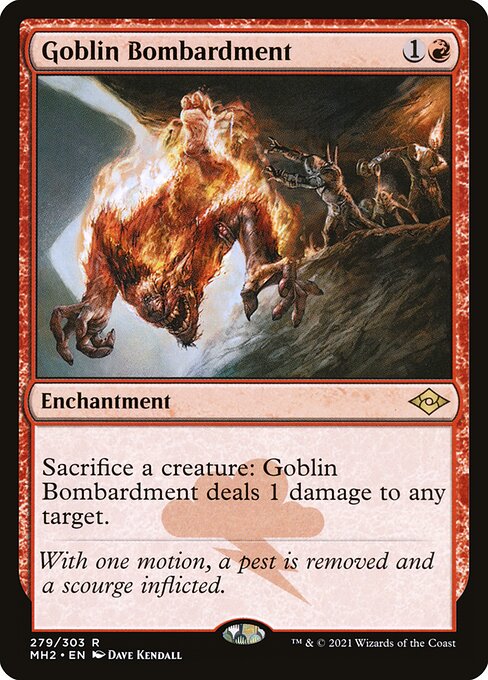


Red outlets that pull drafters in
- Direct damage outlet: Goblin Bombardment
- Pressure outlet: Greater Gargadon (suspend outlet that eats everything)
- Resource conversion: Dark-Dweller Oracle (turns creatures into cards)
Red is also the color where Threaten effects get scary, because an outlet turns “borrow your creature” into “keep your creature.”
White: everyone forgets it, until it saves the whole archetype
White does not get as many classic “sac a creature: profit” cards, but it does get two things cube decks love:
- Protection outlets (turn any creature into a fog-like effect)
- Structure outlets (cards that make tokens and sacrifice play nice)
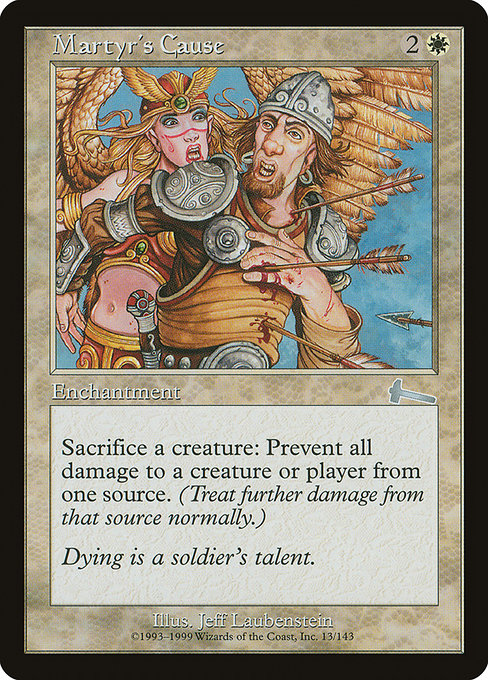


What white does best
- Martyr’s Cause / Fanatical Devotion style effects: sacrifice to prevent damage or protect your board
- These play like “combat math insurance,” and they let token decks convert bodies into survival, which buys time for payoffs to matter.
If your Aristocrats deck dies before it gets value, white-style protection outlets can be the difference.
Green: fewer outlets, but the ones that exist are powerful
Green tends to sacrifice for big swings instead of small increments.
Good green-adjacent picks (often multi-archetype)
- Evolutionary Leap / Greater Good style play: turn creatures into cards
- Birthing Pod style effects: sacrifice as a cost to upgrade your threat (also supports toolbox creature decks)
Green is a great place to hide “fair” sacrifice because the outlet often looks like a value engine, not a combo piece.
Blue: mostly “cash-in,” not classic outlets
Blue is usually a supporting color in sacrifice decks, contributing:
- Card selection
- Artifact token production
- One-shot sacrifice effects
If you want true outlets in blue, you usually end up in artifacts or gold cards, which is fine, just be intentional.
Colorless + lands: the consistency boosters
These are the quiet MVPs because they do not ask drafters to be “in the archetype” to be good.
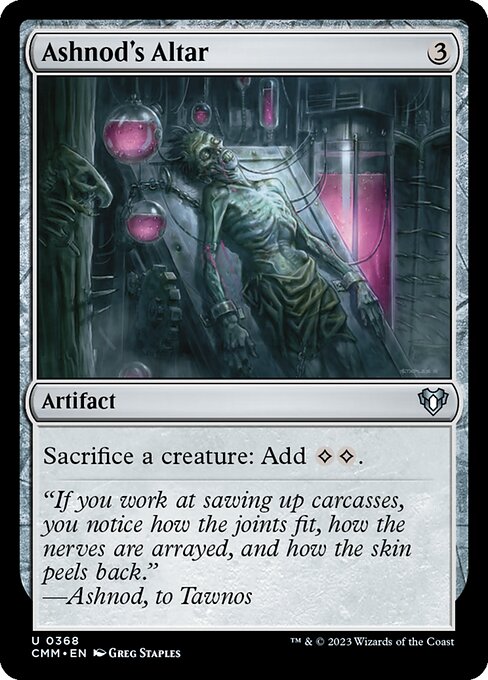
 .
.—Ashnod, to Tawnos
Colorless outlets that scale with power level
- Mana altars: Ashnod’s Altar, Phyrexian Altar
- Win condition outlet: Altar of Dementia
- Utility outlet: Blasting Station (slower, but real)
Land outlets
- High Market: free-ish safety valve
- Phyrexian Tower: the best “costless” acceleration outlet if your cube supports it
Lands are especially nice in cube because they reduce the “my deck drew the wrong half” problem. You get an outlet without spending a spell slot.
Power band notes: when the outlet becomes the whole format
Some “sac outlet” conversations quickly turn into “this card is a format-defining engine.”
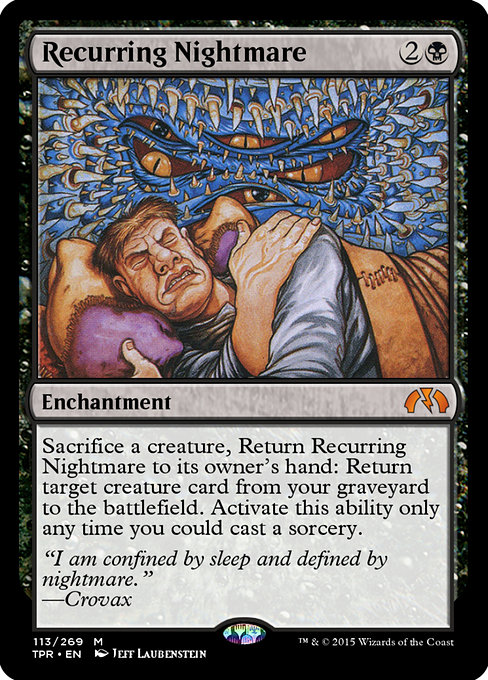
—Crovax
The classic example is Recurring Nightmare, which many cube designers consider either oppressive or highly polarizing depending on environment. If you include it, you are not just adding a sac outlet. You are adding a centerpiece engine that can dominate drafts if the rest of the cube is not equally ruthless.
Similarly, some cards that require sacrifice (tutors, stax pieces, mass-sac effects) are outlet-adjacent and can push the archetype hard even if they are not “repeatable outlets.”
The practical takeaway: match your outlets to your cube’s speed and interaction. Free repeatable outlets plus lots of recursive creatures is a very different world than “once per turn, pay mana, do a thing.”
How many sac outlets should you run?
This is a rule-of-thumb approach that works for most lists:
- 360-card cube (classic 8-player draft):
Aim for 8–12 total “outlet cards”, with 5–8 being repeatable, and the rest being one-shot cash-ins. - 540-card cube (variety-heavy):
Bump that up to 12–18 total outlets, because variance is higher and you want the sacrifice deck to show up reliably.
If you want Aristocrats to be a real deck, drafters need to see enough outlets that they can take one early without fear, and still pick up another later.
Cube-night note: sacrifice decks generate board clutter
Sacrifice-heavy cubes create lots of tokens, counters, and “temporary control” moments. The smoother your table experience is, the more fun the archetype becomes. Consistent sleeves, readable prints, and having the right tokens on hand matter more here than in a straight midrange mirror.
FAQs
What are the best sac outlets for MTG Cube?
The most broadly playable tend to be cheap, repeatable, instant-speed outlets that do something extra (scry, damage, counters, mana). Think Viscera Seer, Carrion Feeder, Goblin Bombardment, and the artifact/land outlets that cost you very little deck space.
Do one-shot cards like Village Rites count as sac outlets?
In practice, yes. They are not engines, but they are excellent redundancy and often play better than a clunky repeatable outlet that costs mana and time.
Is it okay if my cube only has “fair” outlets?
Absolutely. Tap outlets, once-per-turn outlets, and mana outlets are great if you want sacrifice to be a subtheme instead of a centerpiece.
How do I make sure sacrifice is draftable and not parasitic?
Make sure your outlets overlap with other decks. Outlets that help tokens, midrange value, and reanimator will get drafted naturally, and the sacrifice deck will form when the pieces line up.
Should I run sacrifice outlets in lands?
If your cube supports sacrifice at all, lands like High Market and Phyrexian Tower are some of the easiest inclusions because they reduce the “I drew no outlet” failure mode.