

This post helps first-time Cube builders decide how hard to support aggro in your MTG Cube by explaining why aggro keeps the metagame and the draft healthy, so your Cube stays fun for groups with mixed playstyles.
TLDR
- If you do not support aggro in your MTG Cube, your format often drifts into “who has the biggest haymaker,” and drafts start feeling samey.
- Aggro is the pressure valve that forces midrange and control decks to respect their early turns, their mana, and their life total.
- Aggro needs extra help compared to midrange/control because it relies on density (especially 1-drops and 2-drops), not just a few individually powerful cards.
- You can support aggro without making your Cube boring, focus on cards that do double duty (pressure plus utility), and tune your fixing and removal so games stay interactive.
Most first-time Cubes don’t fail because they include a “bad” card. They fail because they accidentally include too many expensive cards, too many hard-to-cast gold cards, and too many narrow role-players that only matter in one lane.
If you want a Cube that drafts well more than once, you almost always want to support aggro in your MTG Cube, even if your personal taste leans midrange, control, or big splashy finishers.
Why you should support aggro in your MTG Cube
Aggro does three jobs in Cube that are easy to underestimate:
- It sets the pace.
If there’s real early pressure available, every deck needs a plan for turns 1–3. That makes games feel like they start right away, not on turn five. - It keeps “late game greed” honest.
When drafters know they might face a fast deck, they draft differently. They pick cheaper interaction, they value early blockers and life gain appropriately, and they cannot assume they will always have time to cast their seven-drop. - It prevents the format from collapsing into mirrors.
When aggro is weak, the “best” strategy often becomes some flavor of midrange-control goodstuff. Then the draft gets repetitive: everyone takes fixing, removal, and the biggest threat they can cast.
If you have ever looked at a final pod and realized half the decks are three-color piles with the same top end, that is a metagame signal. Your Cube is telling people that “being slow” is free.

The arms race problem when aggro support is light
Cube players have a nickname for the most common “new builder” outcome: the Dragon Cube. It does not mean tribal Dragons. It means a Cube that is slow, top-heavy, heavy on gold cards, and light on aggressive pressure. (It can still be fun, but it tends to play the same way over and over.)
Here’s the arms race in plain table terms:
- You cut aggressive one-drops because they look boring.
- Midrange becomes the “fast” deck by default.
- Control still has plenty of cheap removal and disruption.
- Control reliably reaches the late game, then starts playing bigger and bigger finishers.
- Everyone adapts by drafting even bigger finishers.
- Games turn into “my haymaker beats your haymaker,” and your draft decisions narrow.
It is like removing the “scissors” option from rock-paper-scissors. Once early pressure is not a real threat, the winning move is usually “go over the top,” and that pushes every archetype toward the same shape.
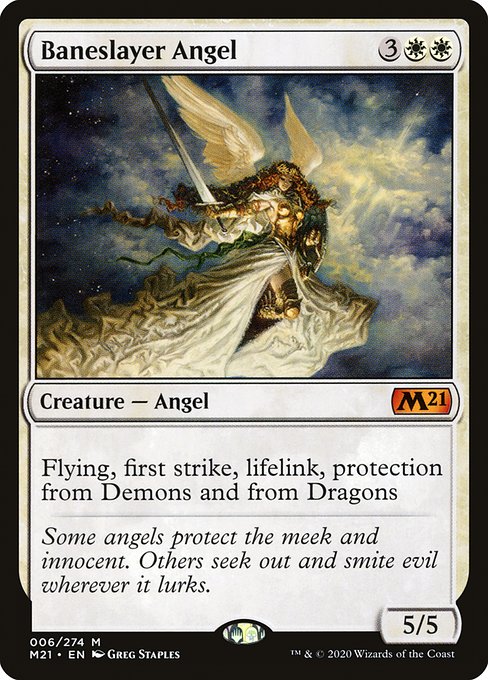
This is where you get the familiar spiral of threats: Baneslayer into Titan into planeswalker into Eldrazi. You can call that battlecruiser Magic. It is fun sometimes. It is just not very replayable if it is the only thing your Cube reliably produces.

Aggro requires support (more than other macro archetypes)
A common trap is thinking: “If I want aggro, midrange, and control to be balanced, I should give them equal space.”
In practice, aggro needs more dedicated support than the other macro archetypes, for a few reasons.
Midrange and control pieces are more interchangeable
Once you are ahead, it often barely matters which five-drop closes. Control decks can trade Baneslayer Angel for almost any other reasonable finisher and still function.
Aggro does not work like that. If your aggro deck misses its one-drop and two-drop too often, it stops being aggro. It becomes a medium-speed deck with worse cards.
Aggro has less natural overlap with control
Control can play midrange cards. Midrange can play control cards. Aggro cards, especially pure one-mana attackers, are often not what the slower decks want (unless they are forced to respect the mirror, which is exactly the point).
So aggro needs extra redundancy because fewer other players are “accidentally” drafting its cards.
Aggro is a density deck, not a “one build-around card” deck
You can add a single splashy engine card to make a control shell feel different. You cannot add a single card and suddenly make aggro real.
Aggro is arithmetic. You need enough:
- 1-mana plays
- 2-mana follow-ups
- cheap reach (burn, drain, manlands)
- disruptive tools that buy tempo
If your red drafter is sideboarding their Jackal Pup because they cannot reliably curve out, you did not “include aggro,” you included a few aggro-looking cards.
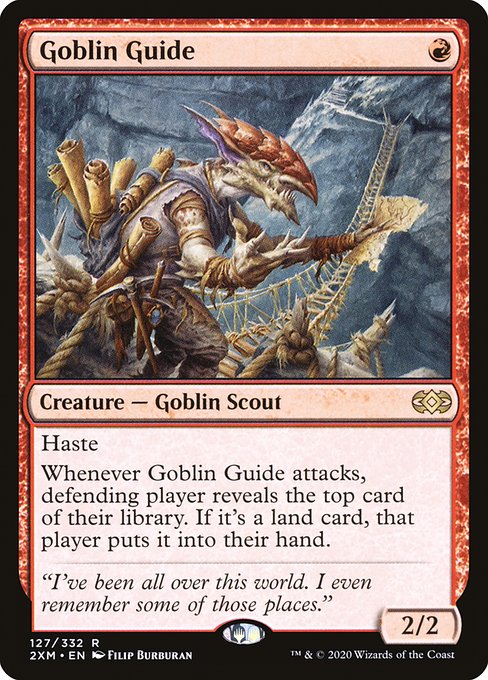

Whenever this creature attacks, defending player reveals the top card of their library. If it's a land card, that player puts it into their hand.
Cube math that explains why aggro feels “missing”
The core draft baseline most Cube discussions assume is:
- 8 players
- 3 packs of 15
- 360 cards drafted
That math matters because it tells you how often your aggro pieces even show up.
- In a 360-card Cube, if you draft the whole thing, every single card is present.
- In a 540-card Cube, you draft 360 cards, so you see about two-thirds of the list in any given draft.
That difference is huge for aggro because aggro needs redundant early plays, not just a couple of premium cards.
If you want the classic “8-player, 3×15” experience, the Cube size choice is also a density choice. If you want the quick version of the math (plus pack plans for weird pod sizes), this PrintACube post lays it out cleanly:
https://printacube.com/how-many-players-can-a-540-card-mtg-cube-support/
A practical way to think about it
Work backwards from the deck you want to exist.
Example “real aggro deck” target in a typical 40-card build:
- 6–8 one-mana plays (creatures or 1-mana interaction)
- 6–8 two-mana plays
- 2–4 reach pieces (burn, manlands, sticky threats)
- 1–3 disruption pieces that matter (mana denial, taxing, anti-lifegain, etc.)
Now ask: “How many of those cards have to be in the Cube so that one drafter can actually end up with that deck, even if one nearby seat is also red or white?”
That number is nearly always higher than you think.
One table to keep you honest
| Design knob | If it’s too low | If it’s too high | What to do about it |
|---|---|---|---|
| 1-drop creature density | Aggro rarely curves out, control gets greedy | Aggro becomes automatic, games flatten | Add 1-drops until two seats can draft aggro, then stop |
| Cheap removal distribution | Control stabilizes too easily | Aggro mirrors become coin flips | Shift some removal toward damage-based, sorcery-speed, or conditional |
| Fixing quality | Greedy piles ignore color discipline | 5-color goodstuff becomes the default | Use strong fixing, but keep costs real (pain lands, shocks, fewer perfect duals) |
| Lifegain and sweepers | Aggro gets blanked too often | Aggro dominates slower decks | Make lifegain earn its keep (attached to bodies), keep sweeper count reasonable |
| Aggro disruption tools | Combo and ramp ignore aggro clock | Aggro becomes “lock you out” | Add a small number of high-impact hate pieces, not a prison package |
Aggro support checklist (what to audit in your Cube)
Use this as a quick “is aggro actually draftable?” audit. If you can’t check most of these boxes, aggro is probably a theme, not a pillar.
- Your primary aggro colors (usually red and white) have a deep bench of 1-drops and 2-drops that can actually attack.
- At least two drafters can plausibly end up in aggressive decks in a normal 8-person pod.
- Aggro has access to reach (burn, manlands, evasive threats, sticky threats), so it can close after the board clogs.
- Aggro has access to tempo-positive disruption (taxing, mana denial, cheap interaction), not just creatures.
- Your removal suite does not let slower decks trade 1-for-1 forever while gaining life incidentally.
- Your fixing does not make “three-color control pile” the easiest draft every time.
- Your top end exists, but it is not so dense that every deck naturally becomes a 5+ drop deck.
- Aggro has at least a few cards that other decks want too (so picks are interesting), but not so many that aggro never wheels playables.
“But aggro cards are boring” and how to keep variety anyway
This is the real emotional barrier. Many of the cards that make aggro work look plain next to a mythic rare finisher.
The fix is not “only include flashy aggro cards.” The fix is pick aggro cards that do more than one job.
Here are three design paths that preserve variety without letting the Cube drift into a Dragon Cube.
Good (simple and functional):
Lean into clean, efficient aggro curves in red and white. Keep the card text minimal. Make sure the decks actually exist.
Better (more overlap, fewer dead picks):
Use aggressive creatures with upside (ETB value, built-in protection, evasion, modal spells). Use burn that is less attractive to control when possible, so the aggro drafter gets wheels.
Best (aggro has identity, not just speed):
Give aggro a small number of high-signal packages like:
- “go wide” plus anthem effects
- sacrifice pressure that can pivot into midrange
- taxing creatures that matter against combo and control
- mana denial that creates real decisions, not lockouts
If your Cube’s power band is very high, the role of aggro gets even more important, because fast mana and busted engines compress the game. This is why “powered vs unpowered” is not just a vibe label, it changes what aggro needs to compete:
https://printacube.com/powered-vs-unpowered-mtg-cubes/
Printing notes that actually affect aggro
Aggro-heavy Cubes stress the “night-of” experience in a specific way: lots of small, similar cards get handled constantly.
A few practical implications if you’re printing play pieces for a Cube:
- Consistency matters more than perfection. Aggro decks shuffle a lot. If some cards feel different in sleeves, it shows up first in aggro mirrors.
- Readability matters because picks are fast. Aggro turns are sequencing puzzles, not just “attack.” Crisp rules text and clear mana symbols reduce table slowdown.
- Version consistency helps reduce mistakes. If you have multiple printings with different templating, newer drafters misread cards more often, and aggro punishes that quickly.
FAQs
Do I have to support aggro in every Cube?
No. If your group actively wants slower, big-spell gameplay, you can intentionally build for that. The key is being honest about it and tuning the rest of the environment (especially removal, fixing, and sweepers) so the games are still interactive.
What’s the biggest sign my Cube does not support aggro?
When the “best deck” is consistently a 3-color midrange-control pile, and aggressive decks only show up when one player gets lucky with a perfect curve.
How many one-drops do I actually need?
It depends on Cube size and how many aggro seats you want. As a starting point, many experienced designers target roughly “high single digits” of aggressive 1-drops per aggro-supporting color in a 540, and often push closer to ten.
Can I support aggro without making it mono-red every time?
Yes. The easiest way is to make sure other colors have playable low-curve threats and that your fixing supports two-color aggro. Black aggro and green-based beatdown can work if you commit to the one-drop slot and pick creatures that overlap with other archetypes.
My playgroup never drafts aggro. Should I still keep the slots?
If your goal is a Cube for a rotating audience, yes, because aggro increases variety and keeps the environment from getting solved. If your Cube is only for a stable group that truly dislikes aggro, you can downshift it, but you should still build in some assertive axis (painful mana, fewer free stabilizers, and a real cost to being slow).