
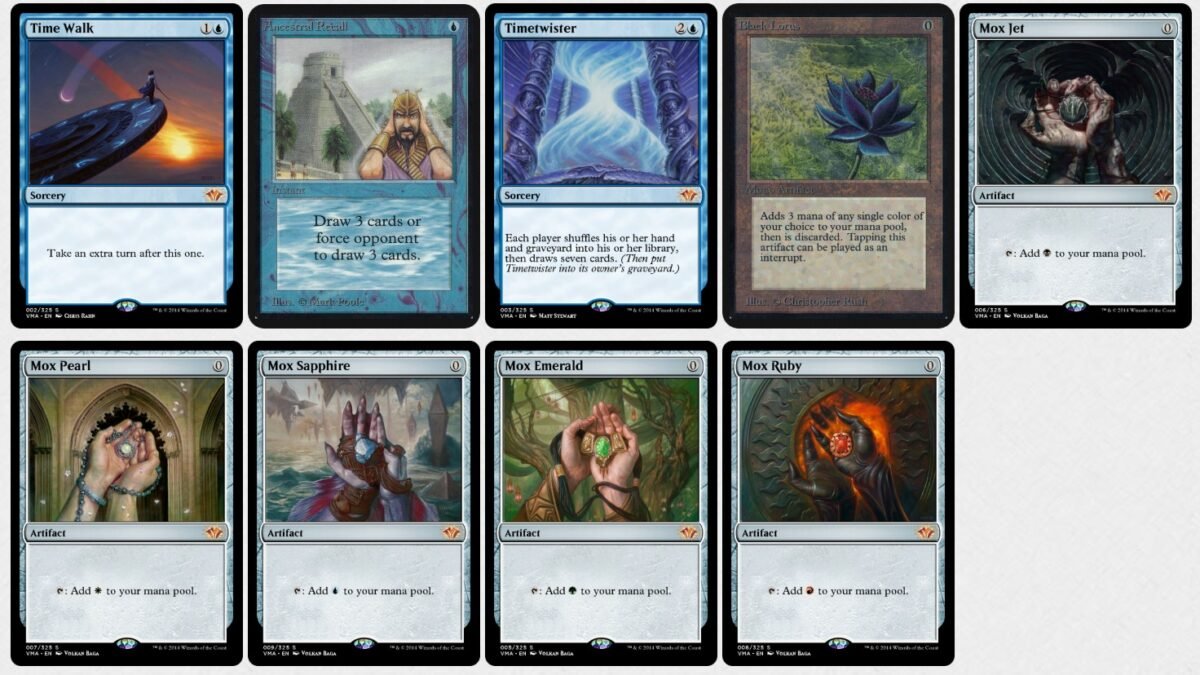
This post helps cube drafters draft the MTG Vintage Cube with confidence by explaining how the format works, what to prioritize, and how to build a clean 40-card deck, so you can win more matches and have better draft nights.
TLDR
- A Vintage Cube draft is about balancing broken power (fast mana, tutors, combo engines) with boring fundamentals (fixing, interaction, a functional curve).
- Cube math matters: an 8-player, 3×15 draft uses 360 cards, so a 540-card cube is high variance and rewards flexible decks and overlap.
- Your first 5 picks should keep you open, then you commit when you see density (payoffs plus enablers plus fixing).
- Most 0-3s come from the same two problems: greedy mana with no fixing, or a half-combo deck that never became a whole deck.
- In paper, the best “Vintage Cube feel” comes from consistent sleeves, readable prints, a basics station, and fast setup.
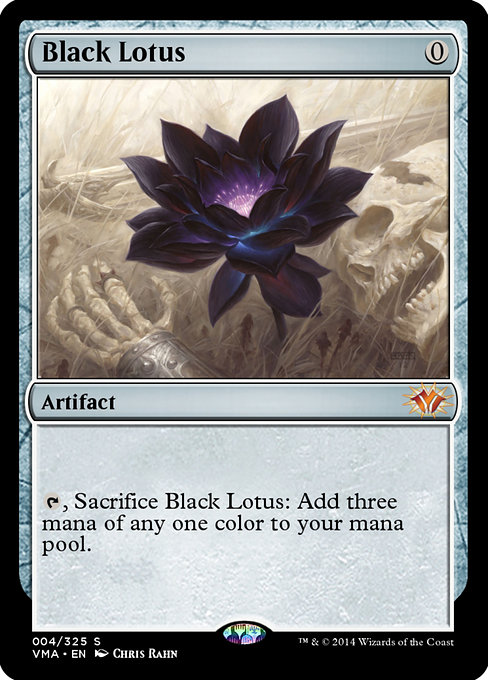

 , Sacrifice this artifact: Add three mana of any one color.
What a Vintage Cube draft actually is
Vintage Cube is the “all killer, no filler” version of cube: iconic early Magic power, modern bombs, and lots of decks that can do something outrageous on turn 1 or 2. It’s also not a normal Limited environment where you can just draft “good cards” and expect the deck to work.
A Vintage Cube draft asks a different question:
“What is my deck trying to do that is powerful, consistent, and hard to stop?”
That can mean:
- Ending the game quickly (aggro, tempo, proactive combo)
- Cheating something huge (reanimator, Tinker, Sneak Attack)
- Going over the top with mana and planeswalkers (green multicolor, ramp-goodstuff)
- Locking up the game with interaction and inevitability (control shells)
And because the power level is so high, you also have to assume your opponent is doing something unfair. “My deck is solid” is not a plan by itself.
Cube math that keeps you honest
Let’s do the baseline math most Vintage Cube drafts are built around:
- 8 players
- 3 packs of 15
- 45 picks per player
- 360 total cards drafted
If the cube list is 540 cards, that means 180 cards are not seen in a full pod.
That one fact explains a lot:
- You can draft a “known” archetype and still miss a key piece.
- You should value redundancy and overlap more than you would in a smaller cube.
- “Open a combo card, force it” is riskier unless you quickly confirm you’re getting the support.
What this means for your seat
In Vintage Cube, you don’t just draft a deck. You draft a deck plus a backup plan.
Examples:
- If you start reanimator, you can pivot into a UB control shell that happens to have a reanimator package.
- If you start artifacts, you can pivot into blue tempo/control with artifact payoffs.
- If you start green fixing, you can become 4c goodstuff, or you can tighten into GW/x midrange depending on what wheels.
If your picks only function in one exact configuration, you’re playing the hardest mode.
A practical “first 5 picks” framework
Here’s a simple way to not trap yourself early in a Vintage Cube draft.
Picks 1–2: take a reason to be excited (or a reason your mana will work)
The best early picks usually fall into one of these buckets:
- Game-warping power (fast mana, broken card advantage, premium engines)
- Premium fixing (especially if your cube supports very greedy decks)
- Premium interaction (free countermagic, cheap removal that stays relevant)
- A clear build-around that already has redundancy in the cube
If you take a build-around, your next picks should immediately answer:
“Can I realistically get enough support in this seat?”
Picks 3–5: either stay open or commit with density
By pick 5, you’re looking for one of these green lights:
- You have a payoff and you’re seeing enablers late enough to think it’s open.
- You have strong fixing and you’re seeing multicolor power.
- You have the beginnings of a curve plus interaction, and the lane is clean.
If you do not see a green light, you should bias toward:
- fixing
- cheap interaction
- flexible threats
That’s the stuff that lets you change plans without wasting picks.
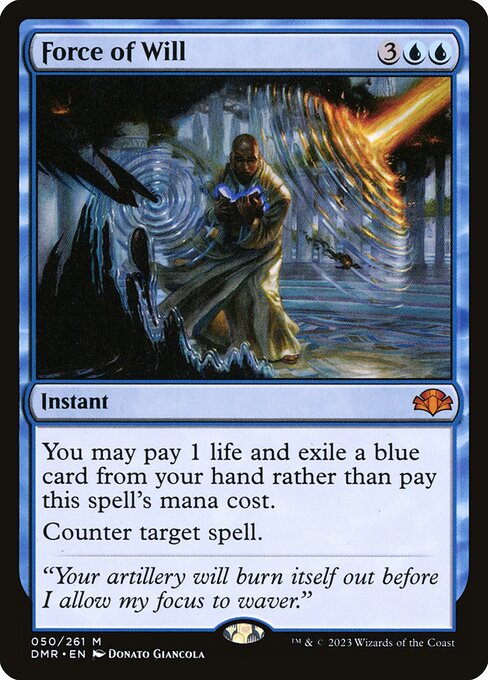


Counter target spell.
The archetype map: common Vintage Cube lanes (and what they want)
This is not every deck you can draft, but it covers the lanes you’ll see constantly.
| Archetype lane | What you’re trying to do | Key “signals” you want to see | Draft priorities | Tradeoff you accept |
|---|---|---|---|---|
| Boros Aggro (RW) | Curve out, remove blockers, end the game before haymakers matter | Cheap creatures and premium burn wheeling, good RW lands late | 1-drops, burn, efficient removal, fixing that casts spells on time | You give up some late-game inevitability |
| Dimir Reanimator (UB) | Put a huge threat in the graveyard and bring it back early, with a real backup plan | Reanimation spells plus discard outlets, big targets not being contested | Reanimate effects, discard outlets, tutors, cheap interaction | Half-drafting this deck is a common 0-3 path |
| Blue/X Artifacts | Turn cheap artifacts into broken mana and huge payoffs | “Innocent” artifacts and artifact payoffs both showing up | Cheap artifacts, payoff threats, interaction, artifact-friendly fixing | You can run short on real answers if you over-focus on engines |
| Azorius Control (WU) | Answer everything, stabilize, win with planeswalkers or inevitability | Sweepers and counters flowing, finishers not being fought over | Cheap interaction, sweepers, card advantage, fixing | You give up speed and sometimes lose to nut draws |
| Multicolor Green (GX) | Draft the best spells at the table by investing in fixing and mana | Fixing and green acceleration not being cut hard | Fixing first, then power, then interaction | You can build a pile that loses to focused decks if you get sloppy |
| Combo packages (Storm, Tinker, Sneak, Channel) | Assemble a small number of cards that end the game immediately | Tutors and key pieces arriving at the right times | Tutors, fast mana, key pieces, protection | High ceiling, but you must draft enough support and protection |
A good rule: if your deck is trying to do something unfair, it still needs one of these:
- protection (free interaction or discard)
- a second angle (a fair plan that wins if the combo doesn’t show up)
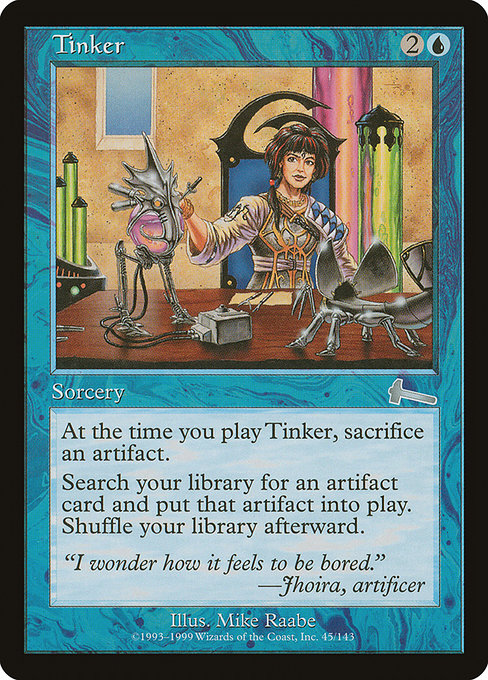

Search your library for an artifact card, put that card onto the battlefield, then shuffle.
—Jhoira, artificer
Fixing and mana: how greedy should you be?
Vintage Cube makes people greedy because the rewards are real. The punishment is also real.
A simple mana rule that actually works
When you finish deckbuilding, you want:
- 16–18 mana sources total (lands plus fast mana sources)
- ~10 sources of your main color
- ~3 sources for a light splash
That’s the “don’t lose to your own deck” baseline.
The “greed checklist” for splashes
Before you splash a card, check these boxes:
- Can I cast it with 3 sources without wrecking my early game?
- Is it worth splashing because it’s game-ending, not just “nice”?
- Does my deck already have enough playables in its main colors?
- Do I have fixing that fits my plan (fast decks need untapped sources, slower decks can accept some tapped lands)?
If you fail two of those checks, the splash is usually a trap.
Deckbuilding: the mistakes that cost the most wins
Vintage Cube deckbuilding is where a “good draft” turns into a clean 2-1 or a confusing 0-3.
1) Playing too many clunky cards
Because the power level is so high, your medium 5-drops are not safe. If your hand is slow and your opponent does something broken, you die holding a “fine” card.
Try to build so your deck can:
- affect the board early, or
- interact early, or
- present a threat early
If you can’t do at least one of those consistently, you’re relying on luck.
2) Not enough interaction
Even proactive decks usually want a minimum amount of cheap disruption, because your opponent’s best draws are not polite.
If you’re aggro: you want removal and reach.
If you’re combo: you want protection.
If you’re control: you want early interaction and sweepers, not just expensive answers.
3) Sideboard is part of the draft
In Vintage Cube, sideboard cards can feel like main-deck cards in the right matchup:
- graveyard hate
- artifact hate
- extra counters
- extra removal
- anti-aggro tools
If you draft a focused deck, you should spend picks on the cards that stop the thing you’re most likely to lose to.
Drafting Vintage Cube with fewer than 8 players
Most real-life cube nights are 4–6 players. You can still get a great Vintage Cube experience, but you need to choose a format that fits your group.
Here’s a quick format picker:
- 6 players: traditional booster draft works well. Consider 3×15, or increase the number of packs if you want to see more of the cube.
- 4 players: consider formats that increase card velocity (like grid draft) so you see more of the list.
- 2 players: Winston draft is a classic for cube because it creates real decisions from a small pool.
The tradeoff is always the same:
- More cards seen = more variety, less archetype density per drafter
- Fewer cards seen = more consistent decks, less novelty
Hosting Vintage Cube in paper: make it feel like “real cube night”
If you’re building a paper Vintage Cube experience (especially with printed play pieces), the goal is simple:
Make drafting and shuffling smooth, and make cards readable across the table.
Two internal reads that help with the “night-of” side:
- Powered vs Unpowered MTG Cubes
- How to Store and Transport an MTG Cube: Boxes, Sorting, and Travel Setups
The Vintage Cube night checklist
- Sleeves that shuffle well (and enough spares to replace split sleeves)
- A basics station (sorted, easy to grab, and clearly separated)
- Tokens and dice in one place
- A clear timebox:
- draft time
- build time
- round time
- Pack plan decided before people arrive
- A cleanup plan (sorting state: sorted vs draft-ready)
This is the unsexy part, but it’s the difference between “we should do this again next week” and “that took forever.”
FAQs
How many players does a 540-card Vintage cube support?
A full 8-player draft is the classic experience, but 540 also supports repeated pods without feeling samey. For smaller groups, you’ll get better results by choosing a draft format that matches your player count than by forcing 8-player assumptions onto 4 people.
Is Vintage cube always powered?
Not automatically. “Vintage” describes the card pool (how far back you can go), while “powered” describes whether you include the Power Nine and similar fast-mana effects. Many Vintage cubes are powered, but it’s a separate knob.
How many lands should I run in Vintage Cube?
Most decks land around 16–18 mana sources total (lands plus acceleration). Aggro trends lower, control trends higher, and decks with lots of fast mana can shave lands if their curve supports it.
Should I first-pick fixing or power?
If the power is truly game-warping, take the power. If the pack is medium, taking premium fixing early is often the difference between casting your spells and staring at them.
Where do I find the current MTGO Vintage Cube list?
Magic Online maintains a page with the current full list and change log. If you’re drafting in paper, it’s a great “default list” to start from, then you can tune from there.