
Top 10 MTG Cube Cards and Card Types That Hold a Draft Together
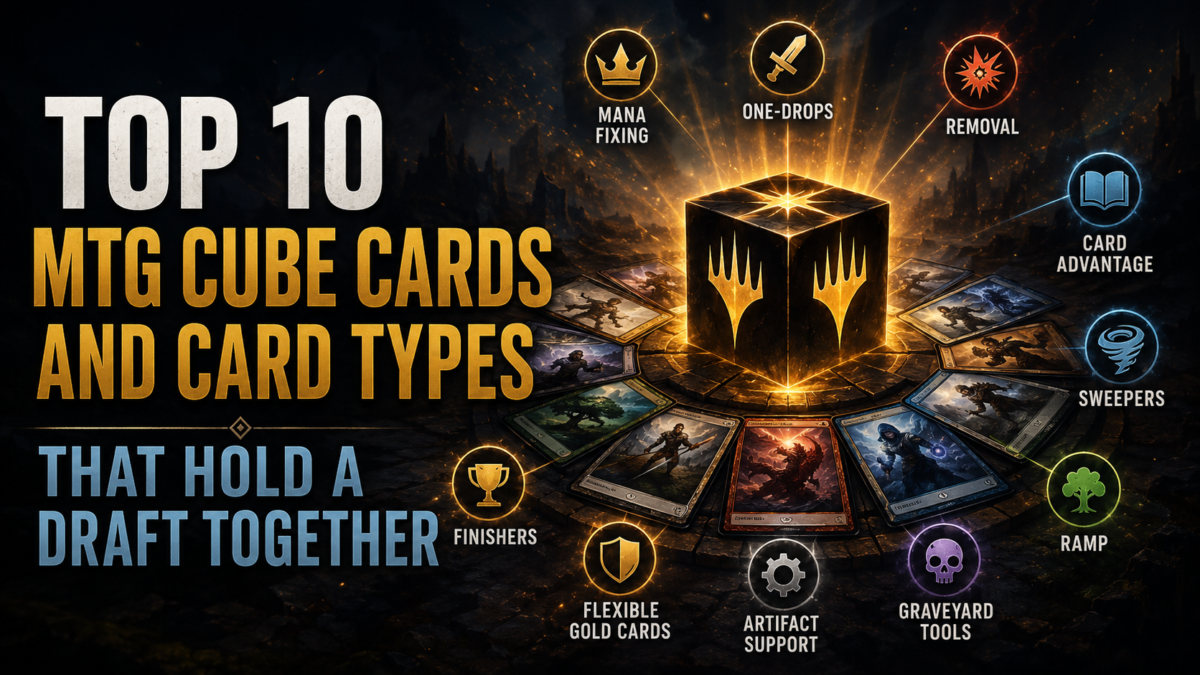
Table of Contents
TLDR
The best MTG cube cards are not always the flashiest cards. A healthy cube needs fixing, removal, cheap threats, card advantage, sweepers, ramp, graveyard tools, artifact support, flexible gold cards, and finishers. Basically, the boring cards do the plumbing, and the exciting cards get all the applause. Typical.
MTG cube cards should create choices. A cube full of famous cards can still draft badly if the cards do not connect. A cube full of smart role-players can feel incredible because every pick changes what is possible. This is the part of cube design where humility enters the room, immediately sees a first-pick planeswalker, and leaves.
If you are building from a custom list, PrintACube’s Print Your Own MTG Cube option is built for turning a finished list into a consistent draft stack. Just make sure the list itself is doing real work before you print it, because cardboard cannot fix design denial.
1. Mana Fixing
Fixing is the most important card category in many cubes. Lands, mana rocks, treasures, and flexible fixing let players cast their spells and splash interesting cards.
Bad fixing makes decks feel fake. Players draft great cards, then lose because their mana base is a crime scene. Good fixing lets drafters take risks without making every deck a five-color soup.
The best fixing depends on power level. Vintage cubes may want fetch lands, duals, fast mana, and strong artifacts. Modern-style cubes may want shock lands, fetches, pathways, pain lands, or other clean cycles.
2. One-Mana Creatures
One-drops are not glamorous, but aggro needs them. Without enough one-mana creatures, aggressive decks start on turn two too often, which gives midrange and control too much time.
Good one-drops should create pressure and sometimes provide utility. Cards that attack well, scale, disrupt, or create value are ideal.
This is why PrintACube’s article on supporting aggro in your MTG cube matters. Aggro does not survive because you included three red creatures and wished them well. It needs density.
3. Cheap Removal
Cheap removal keeps games interactive. It answers early threats, breaks up synergy decks, protects slower strategies, and stops snowball cards from turning the table into a one-player presentation.
The best cube removal is efficient but not always universal. Too much perfect removal can make creature decks miserable. Too little removal lets the first busted permanent become a hostage situation.
Mix spot removal, burn, bounce, edicts, fight spells, and artifact or enchantment answers based on your cube’s needs.
4. Flexible Countermagic
Countermagic gives blue decks interaction, but it needs careful tuning. Too many hard counters can make games feel like one player is filing paperwork against the other. Too few and blue loses one of its main ways to interact.
Flexible counters are especially good. Cards that answer noncreature spells, protect tempo threats, or trade efficiently early tend to play better than slow permission that only control wants.
Countermagic also supports tempo, control, spells-matter, and flash decks.
5. Card Advantage Engines
Every cube needs ways for decks to keep playing after the first wave of resources. Card draw, planeswalkers, recursive threats, flashback cards, equipment, and value creatures all help.
The goal is not to make every deck grind forever. The goal is to give decks ways to recover, pivot, and compete after trading resources.
Card advantage engines should be varied. Blue draws cards. Black pays life or sacrifices resources. Green uses creatures. White increasingly uses tokens, small creatures, and catch-up tools. Red rummages, exiles, and attacks. Everyone gets a little something, because apparently sharing is healthy.
6. Sweepers
Sweepers stop creature decks from being the only strategy, but they need restraint. A cube with too many sweepers punishes players for committing to the board. A cube with too few lets go-wide decks run over everything.
Good sweepers create tension. Should the aggro player extend? Should the control player wait one more turn? Should the midrange player hold back a threat? That is actual gameplay.
Include sweepers that match your power band. Wrath effects, damage sweepers, bounce sweepers, and conditional sweepers all shape games differently.
7. Ramp
Ramp lets green and artifact decks go bigger than the table. It supports expensive threats, splashy spells, lands-matter themes, and sometimes combo.
Good ramp should lead somewhere. Mana elves, land search, mana rocks, and treasure makers are only exciting if the cube includes cards worth accelerating into.
Ramp also needs counterplay. Removal, discard, tempo, and aggressive pressure all help keep ramp from becoming “I cast more mana than you, please admire my personality.”
8. Graveyard Interaction
If your cube supports graveyard themes, it also needs graveyard interaction. That does not mean every deck needs Rest in Peace-style nuclear options. It means players should have tools to fight recursion, reanimator, escape, flashback, and self-mill value.
Soft graveyard interaction often plays best. Cards that exile a card incidentally, replace themselves, or attach graveyard hate to a playable body are healthier than narrow hate cards that sit in sideboards forever.
The graveyard should matter. It should not be an untouchable vacation home for value engines.
9. Flexible Gold Cards
Gold cards are exciting because they signal archetypes. They are dangerous because too many of them clog packs. A gold card needs to justify the mana restriction.
The best gold cards are powerful enough to pull drafters into a lane but not so narrow that they become traps. A good signpost card says, “this deck exists.” A bad one says, “hope you opened the other seven cards, champ.”
Use gold cards as spice, not structural beams.
10. Finishers
Finishers give decks a way to end games. Control needs them. Ramp needs them. Reanimator needs them. Even midrange decks want threats that break parity.
A good finisher should match the environment. In a high-powered cube, finishers need immediate impact or protection. In a lower-powered cube, slower threats can shine.
Avoid too many expensive cards that only look cool. A cube can drown in six-drops. It is not a dignified death.
FAQs
What are the most important MTG cube cards?
Mana fixing, cheap interaction, one-drops, and card advantage engines are usually more important than splashy finishers.
How many removal spells should a cube have?
There is no universal number, but every color pair should have access to meaningful interaction. If games are decided by unanswered permanents too often, add more answers.
Are gold cards bad in cube?
No. Gold cards are useful signposts, but too many narrow gold cards can make packs clunky and reduce draft flexibility.
Should my cube include expensive cards?
Yes, if they have a role. Expensive cards should stabilize, win, or create a major shift. They should not just sit in hand looking mythic.
References
Wizards of the Coast: Building Your First Cube
PrintACube: Print Your Own MTG Cube
PrintACube: Support Aggro in Your MTG Cube
ProxyKing: MTG Proxies