
This post helps cube drafters choose the right cube “format” (meaning the cube’s card-pool rules and vibe) by breaking down the most popular MTG cube formats and the tradeoffs, so you can build, buy, or print something your group will actually love.
TLDR
- Powered/Vintage-style cubes are the most widely recognized (and most copied) because official digital cubes made them the default mental image of “cube.”
- Legacy-style (unpowered eternal) cubes keep the “greatest hits” feel, but cut the Power Nine ceiling for cleaner, more interactive games.
- Modern cubes push toward modern-era pacing, fewer turn-one blowouts, and more “tight Limited, but every card is a banger.”
- Pauper and Peasant/Artisan cubes are popular because they’re cheaper, lower-variance, and surprisingly deep.
- Set cubes are a common “draft this set forever” option, and a great on-ramp for new cube builders.
- Commander cubes and microcubes (Twoberts) are popular when your reality is “we mostly have 4 players” (or fewer).
What “cube format” usually means
Cube doesn’t have one official rules document. So when people ask about the most popular MTG cube formats, they usually mean one of these:
- Format-themed card pools (Vintage, Legacy, Modern, Pauper, Peasant).
- Structural formats (Set Cube, Commander Cube, Microcube).
- Theme formats (plane, mechanic, tribal, era, aesthetic).
Think of “format” as the cube’s elevator pitch: what cards are allowed, what power band you’re aiming for, and what kind of games you want.
The most popular MTG cube formats (and why they’re everywhere)
1) Powered “Vintage” Cube (the headline act)
If you’ve ever heard someone say “Cube is Magic’s greatest hits,” this is what they mean: iconic cards, broken fast mana, and explosive games where a single pick can completely change your deck’s ceiling.
A representative “powered” card looks like this:
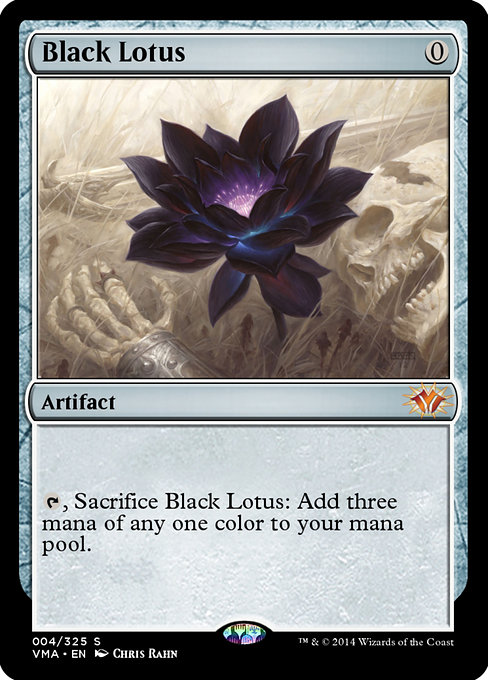

 , Sacrifice this artifact: Add three mana of any one color.
Why it’s popular
- It’s the most “famous” cube experience, and it’s been heavily normalized by high-profile digital cube runs.
- It’s easy to sell to a table: “You get to draft the most iconic cards ever printed.”
Tradeoffs you feel at the table
- Higher variance. Some games are highlight reels, some are non-games.
- Draft picks can be polarizing, because a few cards sit in a different universe of power.
Who it’s for
- Your group enjoys wild swings, fast mana, and “I can’t believe that just happened” stories.
2) Legacy-style (unpowered eternal) Cube
Legacy cube is the “still spicy, more structured” sibling. You keep the deep eternal card pool and the classic archetypes, but you lower the rate of turn-one fireworks by cutting the very top-end accelerants.
Why it’s popular
- It hits a sweet spot: powerful, interactive, and easier to balance than fully powered lists.
- Players who want “real games” more often tend to land here.
Tradeoffs you feel at the table
- Fewer truly absurd openers.
- Slightly less “museum of Magic history,” slightly more “tight draft environment.”
Who it’s for
- You want strong aggro, midrange, control, and combo to all exist, but you want fewer games decided by the first 30 seconds.
3) Modern Cube
Modern cube pushes you toward modern-era pacing: better creatures, cleaner removal, more board-centric gameplay, and fewer ancient “oops” cards.
Why it’s popular
- The gameplay is familiar to a huge slice of players.
- It’s often easier to keep drafts feeling consistent, because the power band is naturally tighter.
Tradeoffs you feel at the table
- You lose some of the vintage “time capsule” charm and the oldest engines.
- Some drafters miss the truly weird, old-school interactions.
Who it’s for
- Groups that like combat, sequencing, and incremental advantage more than fast-mana chaos.
4) Pauper Cube (commons only)
Pauper cube is proof that “commons” does not mean “boring.” You get a flatter power band, fewer “unbeatable bombs,” and lots of synergy-driven gameplay.
Why it’s popular
- Cheap to build, easy to expand, easy to refresh.
- Drafts often reward fundamentals: curve, removal, combat tricks, value.
Tradeoffs you feel at the table
- Fewer planeswalker-style finishers, fewer “I win” mythics.
- Power is more about engines and density than single-card haymakers.
Who it’s for
- Budget-conscious groups, or groups that want fewer blowouts and more back-and-forth.
5) Peasant / Artisan Cube (commons + uncommons)
Peasant (often called Artisan in some circles) is the “best of both worlds” budget format: still accessible, but with a bigger card pool and more archetype support than commons-only.
Why it’s popular
- More build-around depth than Pauper.
- Still much cheaper than rare-heavy cubes.
Tradeoffs you feel at the table
- Slightly wider power spread than Pauper, but still usually tighter than rare/mythic cubes.
Who it’s for
- Groups who want synergy decks to really sing without jumping to full eternal power.
6) Set Cube (draft one set forever)
Set cubes aim to recreate (or improve) a specific draft format. They’re often not singleton, because duplicates of commons and uncommons help mimic real boosters.
Why it’s popular
- It’s a straightforward project: pick a set you love, then build the “forever draft box.”
- Great for newer cube owners because the set already provides lanes, archetypes, and guardrails.
Tradeoffs you feel at the table
- More setup complexity if you “seed” packs by rarity.
- Bigger card counts, especially if you fully replicate common/uncommon ratios.
Who it’s for
- Players who want nostalgia, comfort, and repeatable drafts of a favorite environment.
7) Theme / Plane / Mechanic Cube (the “I love this” cubes)
This bucket is massive: Innistrad vibes, artifact worlds, tribal battles, graveyard-only degeneracy, “all old border,” you name it.
Why it’s popular
- The pitch is instantly clear, and the drafts feel distinct.
- You get to design toward a vibe, not just a power band.
Tradeoffs you feel at the table
- Theme density can create “on-rails” drafts if you overcommit to narrow cards.
- Balancing can be harder if the theme fights basic limited fundamentals.
Who it’s for
- Playgroups that get excited by flavor, constraints, and identity more than raw card quality.
8) Commander Cube (multiplayer draft for Commander)
Commander cube borrows the idea of drafting packs, but aims at multiplayer Commander-style games (often with special draft rules, commander access, or “pick two” style drafting).
Why it’s popular
- A lot of groups are naturally 4 players, and Commander is how they already like to play.
- The gameplay is social and splashy by design.
Tradeoffs you feel at the table
- Logistics are different: commander selection, color identity support, and multiplayer balance all matter.
- If you get the fixing wrong, decks feel clunky fast.
Who it’s for
- Commander pods who want draft night without leaving multiplayer behind.
9) Microcubes and “Twoberts” (small-group cube)
A Twobert is a 180-card cube designed specifically for 2 to 4 players, which makes it a popular answer to “we rarely have 8.”
Why it’s popular
- Much easier to store, shuffle, and actually fire on a random weeknight.
- You can build something tight, replayable, and synergy-consistent.
Tradeoffs you feel at the table
- Less room for niche archetypes and “pet cards.”
- Every slot matters more, so balancing mistakes show up faster.
Who it’s for
- Couples, small groups, and “we can reliably get 4 people, maybe.”
Comparison table: pick your lane fast
| Format | What it’s trying to feel like | Power band | Typical appeal | Common “gotcha” |
|---|---|---|---|---|
| Powered Vintage-style | Iconic Magic, fireworks | Very high | Big stories, broken mana | More non-games, higher variance |
| Legacy-style eternal | High-power, cleaner games | High | Interaction + archetypes | Hard to define “how unpowered” |
| Modern | Modern pacing + tuned Limited | Med-high | Combat and sequencing matter | Less old-school spice |
| Pauper | Commons synergy and value | Medium | Budget + fair play | Fewer splashy finishers |
| Peasant/Artisan | Pauper, but deeper | Medium | More archetypes, still cheap | Power band can drift if untended |
| Set Cube | Draft a set forever | Varies | Nostalgia + structure | Pack collation and cube size |
| Theme/Plane | “This vibe only” | Varies | Identity and flavor | Too many narrow cards |
| Commander Cube | Multiplayer draft | Varies | Perfect for 4-player pods | Fixing and color identity math |
| Twobert/Microcube | Cube that fires with 2–4 | Varies | Weeknight-friendly | Less room for niche packages |
A simple framework to choose between the most popular MTG cube formats
Use this like a quick decision tree:
- If your group wants iconic nonsense and maximum ceiling, pick Powered Vintage-style.
- If your group wants high power with fewer blowouts, pick Legacy-style (or unpowered eternal).
- If your group wants modern pacing and cleaner games, pick Modern.
- If budget matters and you want tight, fair drafts, pick Pauper or Peasant/Artisan.
- If you want to relive a favorite draft format, pick a Set Cube.
- If you usually have 4 players, strongly consider Commander Cube (multiplayer) or a Twobert (2–4 player traditional draft).
One small printing note that actually changes decisions: formats with lots of stack interaction and text-dense cards (often Powered and Legacy-style) benefit a lot from consistent, readable card fronts so the draft and gameplay stay fast.
FAQs
Is “Vintage cube” always powered?
No. “Vintage” often describes a wide, eternal card pool, while “powered” is specifically about including Power Nine-level fast mana. Plenty of Vintage-style cubes are intentionally unpowered.
What’s the easiest cube format for brand-new cube groups?
Set cubes (because the archetypes are pre-scaffolded) and Peasant/Artisan (because the power band is forgiving) are two of the smoothest starts.
Can I run these formats with fewer than 8 players?
Yes. You can change cube size (Twobert), change pack structure, or change draft method. If “we mostly have 4” is your life, Commander cube and microcubes exist for a reason.
Are set cubes always non-singleton?
Usually, yes. Many set cubes use duplicates of commons and uncommons to mimic draft boosters more closely, though people also build “singleton set-inspired” cubes for easier storage.
What makes a Twobert feel good instead of cramped?
Tight fixing, fewer ultra-narrow cards, and archetypes that overlap. With only 180 cards, every slot needs to pull real weight.