
The American Fork Police Statement Made The Bricks & Minifigs Scandal Look Even Worse
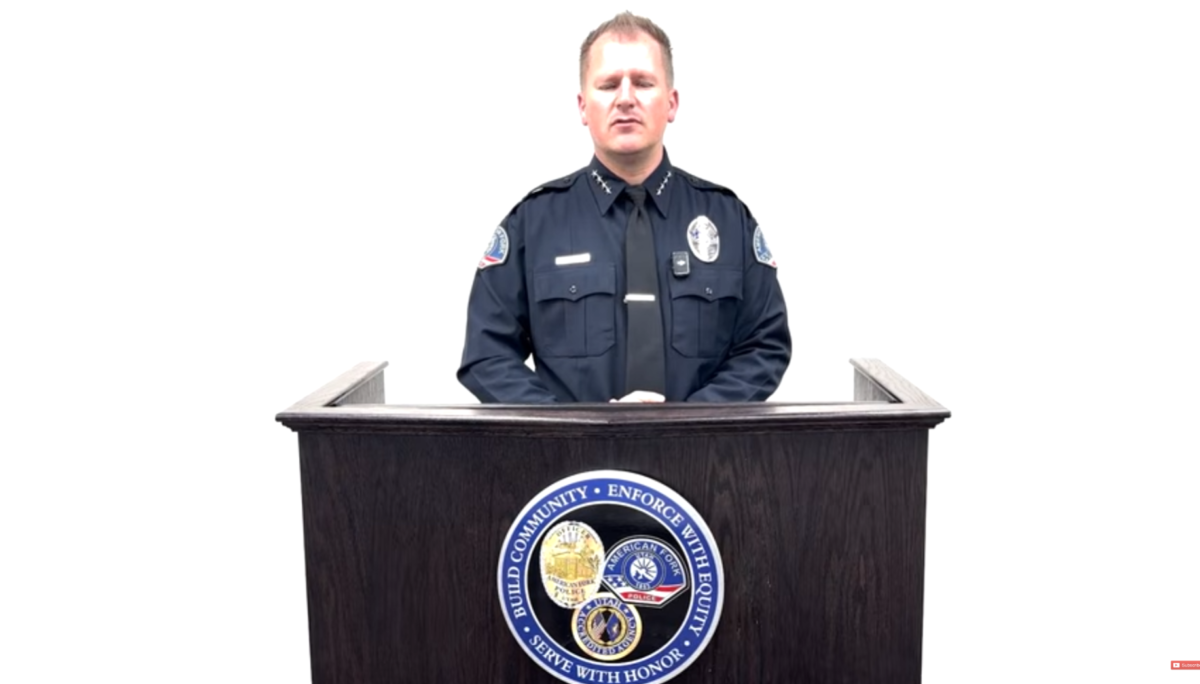
Table of Contents
TLDR
The American Fork Police Department released a public explanation of its actions in the Bricks & Minifigs LEGO scandal. It was supposed to calm people down. It did the opposite.
The statement appears to repeat a disputed stop-sign claim, gloss over a drug search that found nothing, treat Joshua Johnson as the protected party despite his own alarming statements, frame ordinary phone-locking as “manipulation” and explain away police involvement without resolving the central concern: why did the department keep intervening against the people trying to serve papers and expose the dispute?
The department says it was neutral. The pattern looks one-sided.
First, The Caveat
The American Fork Police Department’s conduct has not been fully tested in court. The full bodycam, dispatch logs, warrant affidavits, arrest reports and unredacted records matter.
So this is not a court ruling.
This is an opinion article based on the public statements, transcripts and evidence described so far.
And the opinion is simple: American Fork Police did not fix the corruption concerns. They made them worse.
The department’s public response does not read like a clean rebuttal. It reads like an attempt to explain away a pattern that still looks rotten. Joshua Johnson calls, police respond. Ben Schneider’s group tries to serve papers, police intervene. A stop-sign claim is repeated despite disputed footage. A drug search finds nothing. Court papers are confirmed legitimate, yet Johnson still avoids service. A locked phone becomes “manipulation.” A vague claim about stolen LEGO helps justify a raid.
That is not a reassuring timeline.
It is a roadmap for why people think American Fork Police were protecting the wrong side.
The Statement Still Feels Like “Trust Us”
The first problem is the department’s posture.
American Fork Police had a chance to release a clean, detailed answer. If the viral videos were misleading, the department could have shown why. If the footage was cherry-picked, it could have released the fuller context. If officers acted neutrally, it could have walked through the evidence clearly and directly.
Instead, the response still feels like “trust us.”
That is not enough here.
The public is not dealing with a normal police statement after a minor neighborhood call. This is part of a national scandal involving an allegedly missing six-figure LEGO collection, a corporate franchise dispute, disputed process service, arrests, a GoFundMe, a search warrant and claims that police were being used to shield Joshua Johnson from public and legal pressure.
A vague institutional statement does not solve that.
If the department wants trust, it needs to earn trust with records. Full bodycam. Dispatch logs. Warrant affidavits. Redaction explanations. Arrest reports. Clear timelines.
Without that, the statement feels less like transparency and more like a department trying to narrate its way out of bad footage.
The Stop Sign Explanation Still Looks Bad
The stop-sign issue is one of the simplest contradictions.
The police statement reportedly repeats the claim that the vehicle failed to stop properly at a stop sign. But the public footage appears to show the vehicle stopping. That is a problem.
If the footage shows a full stop, the department has only a few options.
Maybe the officer was mistaken.
Maybe the department has a different angle that changes the story.
Maybe the footage being circulated is incomplete.
Or maybe the stop was pretextual.
But the department cannot just repeat the stop-sign explanation as if the footage does not exist. That makes the statement look dishonest, lazy or both.
This matters because the stop was not random in context. Ben’s group was near Joshua Johnson’s residence trying to make contact as part of a legal dispute. Police already appeared to know who Ben was. The stop happened inside a broader pattern of police intervention.
So the stop-sign claim is not a tiny side detail.
It is the first major sign that police may have been looking for a reason to stop the group.
If the stop was legitimate, prove it. If it was not, admit it.
Do not ask the public to ignore its own eyes.
The Drug Search Looks Like A Fishing Expedition
The department’s account of the vehicle search also does not calm anything down.
According to the public discussion, there was field sobriety testing, no signs of impairment and a K9 alert followed by a search where no illegal substances were found.
That last part matters most:
No illegal substances were found.
The broader concern is that police appeared to escalate from a traffic stop into impairment suspicion and a drug search, then came up empty. That does not look like careful, neutral policing. It looks like officers trying to find something, anything, that could justify pressure on Ben’s group.
The department also needs to answer the heroin-report issue clearly.
Who reported drugs?
What exactly was reported?
Was the caller connected to Joshua Johnson, Brandon Best or anyone else in the dispute?
What evidence existed before the search?
Did officers consider whether a false report might be used as a tool in a heated civil dispute?
Those are not minor questions.
A drug allegation gives police power. It creates a reason to detain, search, intimidate and potentially arrest. If that allegation came from someone with a motive to stop Ben’s group from serving papers or applying pressure, that is a major red flag.
The department’s statement does not remove that concern.
It sharpens it.
Joshua Johnson’s “I’m Going To Shoot Someone” Report Should Have Been A Bigger Deal
One of the most disturbing details is the report that Joshua Johnson allegedly told police he was “going to shoot someone” because of the ongoing harassment.
That is not a throwaway detail.
That is alarming.
If someone trying to avoid service of legal papers tells police he is going to shoot someone, the obvious question is: why does he still appear to be treated as the protected party?
The department seems focused on explaining why Ben’s group could be viewed as harassing or stalking Johnson. But if Johnson made a shooting-related statement, that should be central to the public explanation.
Was Johnson warned?
Was he disarmed?
Was a threat assessment done?
Was the statement treated as a serious risk?
Why did the police response still appear to focus so heavily on the people attempting contact and service?
This is one of the clearest inconsistencies in the whole story.
The department seems to treat Ben’s public pressure and service attempts as the real danger, while Johnson’s alleged shooting remark gets moved past quickly.
That is backwards.
If the department wants the public to believe it acted neutrally, it needs to explain that discrepancy in plain language.
Johnson’s Own Account Undercuts The “This Is Just Harassment” Framing
The American Fork statement also appears to contain a detail that hurts the department’s own framing.
Johnson reportedly told police that Mansell had not been paid, that corporate representatives said they would address the consignment issue directly and that LEGO sets believed to belong to Mansell remained at the store. Johnson also reportedly claimed those items were offered back but Mansell refused.
That does not prove every allegation against Johnson, BAM or Bricks & Minifigs.
But it does prove something important:
This was not imaginary YouTuber drama.
Even Johnson’s version appears to concede that the consignment issue existed, Mansell had not been paid, corporate was involved in addressing the issue and some sets believed to belong to Mansell remained at the store.
That undercuts the idea that Ben’s group was simply inventing a dispute to harass an innocent person.
There was a real underlying property dispute. There were real questions about consigned LEGO. There were real questions about payment and responsibility.
So when police treat the people pushing that dispute as the threat, the department’s neutrality looks even more questionable.
The issue is not whether Ben’s tactics were perfect. Some were not. The issue is why police seemed so willing to accept Johnson’s danger narrative while the underlying property-loss narrative kept getting treated like background noise.
The Service-Of-Papers Explanation Still Makes No Sense
The service-of-papers issue may be the most damning inconsistency.
The department’s account appears to acknowledge that an officer took paperwork to Johnson, that the paperwork related to a legitimate Oregon case and that the court confirmed the case was real.
Then Johnson declined the papers.
And somehow, the focus remained on Ben.
That is absurd.
Serving papers is part of the legal process. It is not supposed to be optional for the person being served. A defendant does not get to make a case go away by saying, “No thanks,” calling police and asking for the other side to be trespassed.
If the papers were fake, that would be one thing.
But if the court confirmed the case was real, then the department needs to explain why Johnson’s refusal carried so much practical weight.
The public question is simple:
If Johnson could keep refusing contact and keep calling police, how was he supposed to be served?
American Fork Police seem much more interested in explaining why Ben’s attempt to serve papers could be stalking than explaining how Johnson was supposed to be served when he kept refusing contact.
That is the problem.
The department focused on stopping the pressure, not making the legal process work.
And that looks like police functioning as a shield.
“Manipulating The Phone” Is Suspicious Language
The phone-seizure explanation is another credibility problem.
The police report reportedly describes Sheldon Norcross as “manipulating” his phone, which officers interpreted as possible destruction of evidence.
But the public footage and commentary describe the act as locking the phone.
Those are very different things.
“Manipulating the device” sounds sinister. It suggests someone opening apps, deleting data, destroying evidence or hiding criminal activity.
“Locked his phone” sounds like a normal privacy reflex.
That wording matters because police reports shape perception. A report can make ordinary conduct sound criminal by choosing loaded language.
If Norcross was actually deleting evidence, the department should say what he did.
If he merely locked his phone, then calling that “manipulation” is a red flag.
People have privacy rights. Locking a phone is not the same thing as destroying evidence. Pressing a power button does not erase an iPhone. Police may have wanted the device preserved, but that does not automatically turn normal phone handling into a criminal act.
This is exactly the kind of language that makes the department look like it was building a justification after deciding who it wanted to target.
The Airbnb Search Looks Like Massive Overkill
The Airbnb search is where the department’s explanation becomes almost impossible to square with normal proportionality.
According to the public account, officers received information from an American Fork resident about YouTubers renting an Airbnb. The warrant affidavit also reportedly referenced the homeowner overhearing possible discussion about stolen LEGO toys.
That is thin stuff in context.
The underlying scandal is about Mansell’s LEGO collection allegedly being mishandled or withheld through the Bricks & Minifigs side of the dispute. Ben’s group was trying to expose that scandal. Then police use a vague “possibly stolen LEGO” angle to enter the place where Ben’s group was staying.
That is wild.
Could there be more in the warrant affidavit? Yes. That is why the affidavit matters.
But if the basis included a vague overheard comment about “possibly stolen LEGO,” the public is right to be skeptical. Especially when Joshua Johnson had already accused Ben of stealing the LEGO in the broader dispute narrative.
The department should explain exactly what evidence supported the stolen-LEGO theory.
Not vibes.
Not overheard fragments.
Not a vague claim from someone adjacent to the situation.
Actual probable cause.
Because from the outside, the raid looks like a massive escalation based on a flimsy counter-accusation from the side being publicly criticized.
That is not reassuring.
It looks like institutional muscle.
The Neutrality Claim Does Not Match The Pattern
Chief Cameron Paul reportedly said nothing in the department’s actions should be interpreted as validating, supporting or defending anyone involved in the separate civil dispute.
That is the official line.
The pattern says something else.
The department may say it was neutral. But public trust is not based on slogans. It is based on conduct.
And the conduct looks one-sided.
Johnson calls. Police respond.
Ben’s group tries to serve papers. Police intervene.
Johnson declines papers tied to a legitimate case. Police do not seem to solve the service problem.
A stop-sign claim is repeated despite disputed footage.
A drug search finds nothing.
A GoFundMe and public sign become part of a criminal theory.
A locked phone is described as “manipulation.”
An Airbnb is searched after a vague stolen-LEGO claim.
That is the pattern.
It does not look neutral.
It looks like the department treated Joshua Johnson as someone to protect and Ben’s group as someone to stop.
That is why the public does not buy the statement.
The Statement Leaves The Biggest Questions Unanswered
The department’s statement does not answer the questions that matter most.
Why was the stop-sign justification repeated if footage appears to show a full stop?
Who reported drugs, and what basis did they have?
Why did the drug search continue into pressure after no drugs were found?
Why did Johnson’s alleged “I’m going to shoot someone” statement not become a larger focus?
Why could Johnson decline papers after the court confirmed the case was legitimate?
Why did police focus more on potential stalking than on how lawful service could be completed?
Why was locking a phone described as manipulation?
What exact evidence supported the stolen-LEGO warrant angle?
Why were redactions made, and what legal basis applied to each one?
Why did the department’s actions repeatedly appear to benefit Johnson?
Those are the questions.
Until American Fork Police answers them with records, not just narration, the corruption concerns will not go away.
The Statement Made The Corruption Concerns Worse
A good police statement should clarify.
This one appears to do the opposite.
It gives the public more pieces of a pattern that already looked bad. It does not convincingly separate the department from Joshua Johnson’s interests. It does not explain the apparent inconsistencies in a way that restores trust.
Instead, it leaves readers with the same disturbing impression:
American Fork Police were not simply responding to public safety concerns.
They were helping contain pressure against Joshua Johnson.
Maybe that was not the intent. Maybe officers believed they were handling a harassment problem. Maybe there is more evidence that changes the story.
But the department has not shown enough to justify that confidence.
And when state power is used to stop people from serving papers, raising funds, criticizing a disputed actor and pursuing civil pressure, the public has every right to demand more than “trust us.”
The Bottom Line
The American Fork Police statement was supposed to defend the department.
Instead, it exposed the same problem people were already angry about.
The department says it was neutral. The events described look one-sided.
The department says the stop was justified. Public footage appears to dispute that.
The department describes a drug investigation. No drugs were found.
The department discusses Johnson as a victim of harassment. Johnson reportedly made a shooting-related statement that should raise its own red flags.
The department acknowledges court papers tied to a real case. Johnson still avoided service.
The department calls phone-locking “manipulation.”
The department relies on a stolen-LEGO angle to justify a search in a case where the missing LEGO allegations point the other way.
That is not a clean defense.
That is why people are furious.
American Fork Police should release the full records, preserve the bodycam, explain the redactions, produce the warrant affidavit and allow outside review.
Until then, the public has every reason to view the department’s conduct as biased, retaliatory and indicative of apparent corruption.
FAQs
Did American Fork Police Prove They Were Neutral?
No. Their statement may explain the department’s preferred version of events, but it does not resolve the core concern that police conduct appeared to benefit Joshua Johnson while targeting the people pressuring him.
Why Does The Stop Sign Issue Matter?
The stop sign issue matters because it was an early police intervention. If public footage shows the vehicle stopped, then the department’s continued reliance on the stop-sign explanation raises serious credibility concerns.
Why Is The Drug Search Important?
The drug search is important because no illegal substances were reportedly found. If the search began from a questionable or motivated report, it may show police power being used to pressure Ben’s group.
Why Does Joshua Johnson’s Alleged Shooting Statement Matter?
If Johnson reportedly said he was going to shoot someone because of the ongoing situation, that should have been treated as a serious risk factor. The public deserves to know why the police response still appeared to focus more heavily on Ben’s group.
Why Is The Process-Service Issue So Troubling?
Because serving court papers is part of the legal process. If the court confirmed the case was legitimate, the department should explain how Johnson could simply refuse papers while police continued treating the people attempting service as the problem.
What Should American Fork Police Release?
The department should release or preserve the full bodycam, dispatch logs, arrest reports, warrant affidavit, redaction log, K9 report, field sobriety records and all reports connected to Johnson’s calls.
References
American Fork Police public statement and related transcript notes
Reckless Ben transcript on the American Fork police encounters
Lawful Masses transcript on the Bricks & Minifigs LEGO dispute
Public reporting on the Bricks & Minifigs / Mansell collection dispute