
Top 10 Magic: The Gathering Cube Draft Formats for Different Playgroups
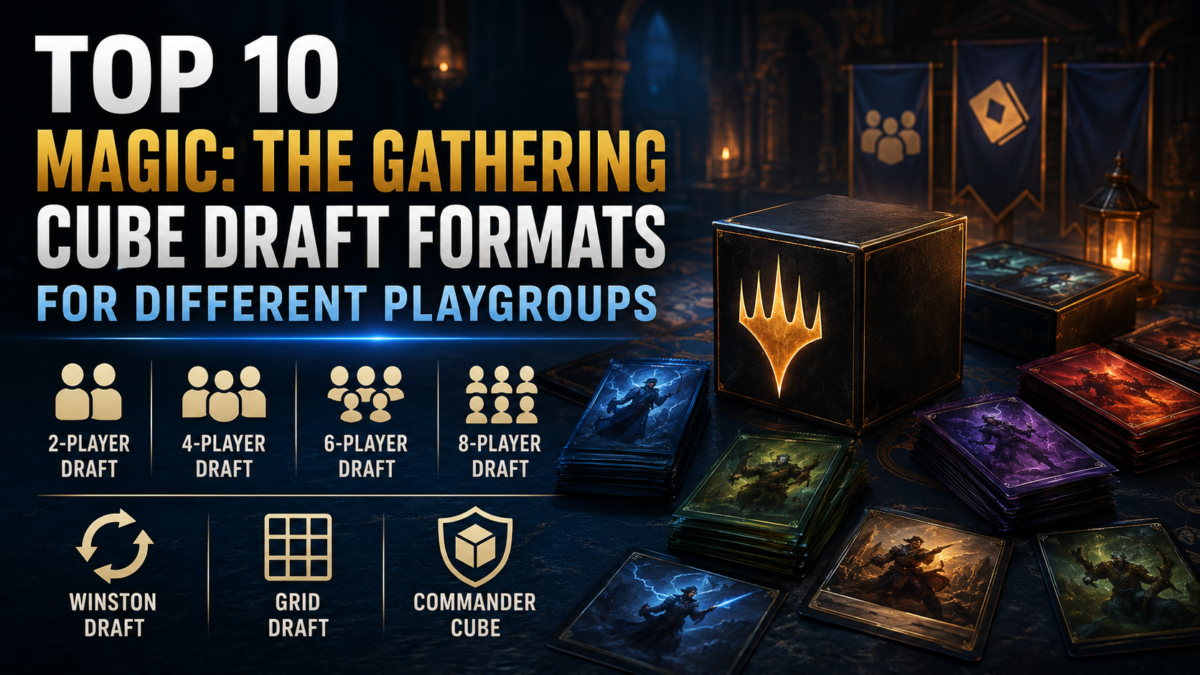
Table of Contents
TLDR
The best Magic: The Gathering cube draft format depends on player count, patience, and how much chaos your group considers “fun” before it becomes a group text apology. Eight-player booster draft is the classic, but Winston, Grid, Winchester, Burn Draft, Pick-Two, Sealed, Commander Cube, Rotisserie, and Team Draft all solve different problems.
Magic: The Gathering cube draft formats matter because real life is rude. You plan for eight players, five show up, one is late, and someone forgot sleeves. Suddenly “normal draft” is less a plan and more a ceremonial shrug.
The good news is cube is flexible. Wizards describes cube as a draft experience built from a curated card pool, and PrintACube has a full guide to MTG cube draft formats for 2, 3, and 4 players if your table size keeps changing because adults have calendars, jobs, and allegedly “responsibilities.”
1. Traditional 8-Player Booster Draft
This is the cleanest version of cube for many groups. Eight players, three 15-card packs each, draft, build 40-card decks, play matches. It produces strong signals, contested lanes, and enough table movement that the draft feels alive.
The downside is obvious. You need eight players. That is not impossible, but it does require the kind of scheduling energy usually reserved for weddings and minor military operations.
Traditional booster draft is best for 360-card cubes because the entire cube gets drafted. Larger cubes add variety because not every card appears every time.
2. 6-Player Booster Draft
Six-player draft is a strong compromise. It still feels like normal draft, but it is easier to assemble. The signals are a little softer, and the table sees fewer cards, but the format works well with 360, 450, and 540-card cubes.
For six players, consider adding an extra pack or using slightly larger packs if your group often struggles for playables. Not every cube needs this, but lower-powered cubes sometimes appreciate the help.
The format is best for groups that want a normal draft night without recruiting two extra humans from the nearest parking lot.
3. 4-Player Pick-Two Draft
Pick-Two is one of the better answers for four players. Players take two cards per pick, which helps decks come together faster and makes the draft feel less thin.
This format works especially well when your cube has lots of flexible cards. It gives players more control, and it reduces the problem of packs wheeling too predictably.
Pick-Two is great for weeknights. It is fast, clean, and does not require everyone to pretend a four-player normal draft feels exactly like eight-player draft. It does not. We can all be adults about this.
4. 4-Player Regular Draft With Extra Packs
Sometimes the easiest format is the one everyone already knows. Four players can draft normally with extra packs, often four or five packs per player depending on cube size and desired deck quality.
This is not the most elegant solution, but it is functional. The biggest issue is that signals can get weird. With only four players, packs return quickly, and lanes are easier to read but less contested.
Use this when your group wants low explanation time and does not care if the draft is slightly less refined.
5. Winston Draft for 2 Players
Winston Draft is one of the classic two-player cube formats. Players draft from hidden piles, choosing whether to take a pile or add to it and move on. It creates tension because you never know exactly what the other player passed.
Winston works best when both players enjoy uncertainty. It feels more like drafting than many two-player options because hidden information matters.
For a deeper walkthrough, PrintACube has a dedicated guide to Winston Draft in MTG.
6. Grid Draft for 2 Players
Grid Draft is faster and more open than Winston. You lay out a 3 by 3 grid, then players take rows or columns. It creates quick, tactical decisions and lets both players see the full draft puzzle.
Grid is best when you want to draft, play, and maybe draft again in the same night. It is also useful for testing cube changes because you see more direct pick tension.
The downside is that it feels less like a traditional draft. That is not bad. It is just a different flavor of cardboard decision-making.
7. Winchester Draft
Winchester is a face-up pile draft that works for two to four players. Players add cards to piles and take piles, creating visible tension over when a pile becomes too good to pass.
It is easy to teach and good for casual groups. It also creates fewer “what just happened?” moments than some hidden-information formats.
Winchester is best when the group likes open information and does not mind that the draft feels more like a shared puzzle than a retail Limited event.
8. Burn Draft for 3 Players
Three players is the awkward dinner party of cube draft. Burn Draft helps by adding churn. Players draft a card and remove another card from the draft before passing.
This simulates some of the pressure missing from a smaller pod. Cards disappear, wheels are less predictable, and players have to make real denial picks.
The downside is emotional. Burning a card someone wanted feels mildly villainous. But cube already involves passing Sol Ring sometimes, so nobody is innocent.
9. Cube Sealed
Cube Sealed is great when players want less draft complexity and more deckbuilding time. Give each player a pool, usually 90 cards for a six-pack-style sealed feel, then build 40-card decks.
Sealed works well for newer players because it removes draft pressure. It also works well when people arrive at different times. You can hand someone a pool and let them build while the table finishes a game.
The tradeoff is lower interaction during the card selection process. Draft is a conversation. Sealed is more like being handed a puzzle and told, “good luck, try not to build five colors.”
10. Commander Cube Draft
Commander Cube is best for groups that love Commander but want variety. Instead of bringing tuned 100-card decks, players draft commanders, support cards, fixing, and multiplayer engines.
A Commander cube needs more legends, more fixing, and more attention to color identity than a normal cube. It also needs a plan for players who do not see a commander early enough.
PrintACube’s guide to Commander MTG Cube is useful if you want multiplayer draft nights without everyone bringing their usual deck and claiming it is “about a seven.” It is never a seven.
FAQs
What is the best cube draft format for two players?
Winston and Grid are the easiest recommendations. Winston feels more like hidden-information draft. Grid is faster and cleaner.
What is the best cube draft format for four players?
Pick-Two is usually the best modern option. Regular draft with extra packs also works if your group wants minimal setup.
Can you cube draft with three players?
Yes. Burn Draft and Winchester are both strong three-player options. Normal draft works, but it often feels thin.
Is Commander Cube harder to design than regular cube?
Usually, yes. Commander Cube needs commanders, color identity support, multiplayer pacing, and better fixing.
References
Wizards of the Coast: MTG Formats
Wizards of the Coast: Building Your First Cube
PrintACube: MTG Cube Draft Formats for 2, 3, and 4 Players
PrintACube: Winston Draft in MTG